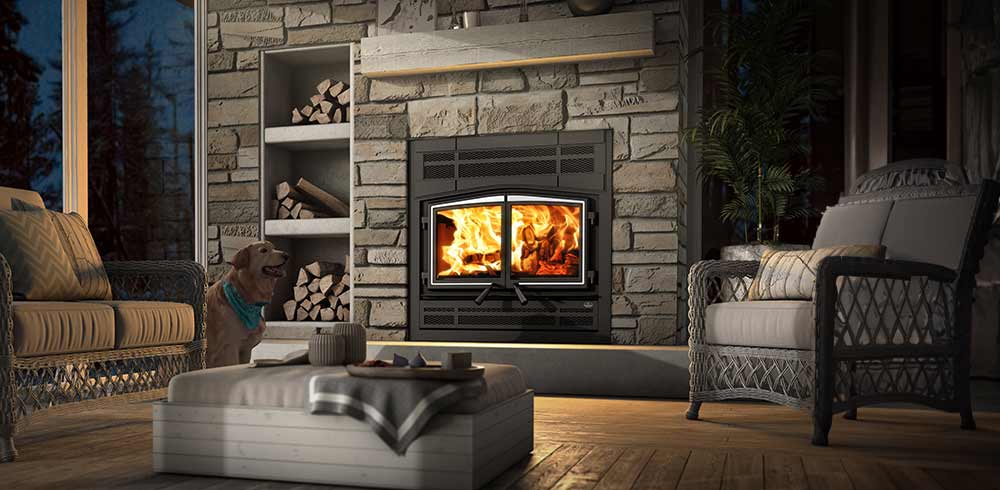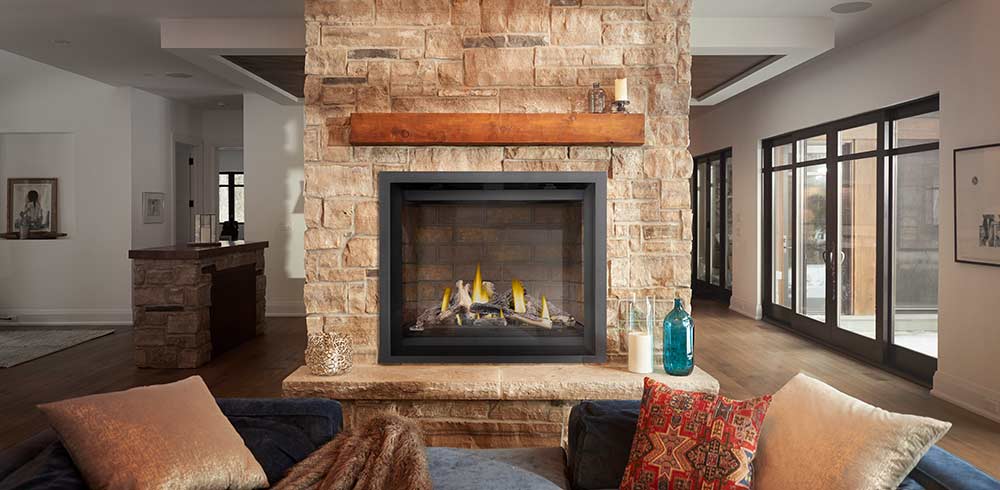
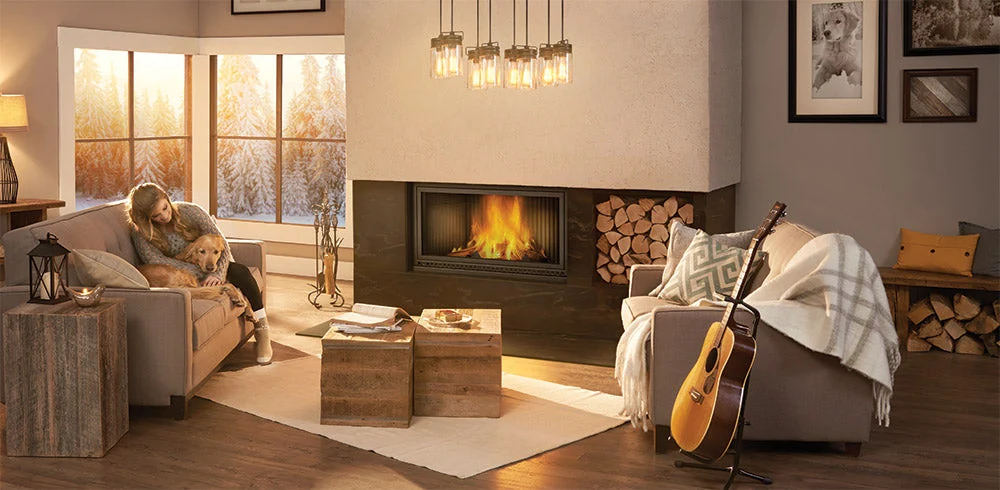
A successful wood fireplace installation starts before the appliance arrives. The fireplace type, chimney system, clearances and local requirements all affect what you can install and how the project should be completed.
Installing a new built-in fireplace and adding a wood-burning insert to an existing fireplace are different projects. This guide explains the planning process for each, including common mistakes to avoid. Use it to prepare for your project alongside the installation manual for your exact appliance and an assessment by a qualified hearth professional.
Start with the Right Installation Type
Before comparing dimensions or ordering components, identify which type of project you are planning.
- Built-in wood fireplace: A manufactured fireplace installed within an enclosure constructed to its framing and clearance requirements. The fireplace and its specified chimney system must be planned together.
- Wood-burning fireplace insert: An appliance installed within a compatible existing fireplace. The original fireplace, chimney, hearth and surrounding materials must be evaluated before installation.
- Freestanding wood stove: An appliance positioned within the room, with its own floor-protection, clearance and chimney requirements. It should not be installed using fireplace or insert instructions.
Explore our built-in wood fireplaces and wood fireplace inserts to compare installation types. If your project calls for a freestanding appliance, browse our wood stoves.
Check Local Requirements Before Purchasing
Confirm applicable permits, inspections and wood-burning appliance restrictions with your local building department or other authority responsible for your project. Air-quality restrictions may also affect which appliances can be installed or when they can be used.
Review the installation manual for the exact model before committing to the purchase. Your installer should account for both the appliance's listing and instructions and applicable local requirements. If a requirement is unclear or appears to conflict, resolve it with the manufacturer and local authority before proceeding.
Mistake to avoid: Assuming that an appliance is approved for your home simply because it is available for sale. Location, application and installation conditions still matter.
Inspect the Existing Fireplace and Chimney

For an insert project, have the existing fireplace and chimney professionally inspected before selecting the final appliance. The assessment should identify the fireplace type, structural condition, chimney condition and any cleaning or repairs needed.
A factory-built fireplace requires particular attention. Locate its identification label and installation instructions. A wood insert can be considered only when the proposed combination is permitted by the applicable appliance listings and manufacturer instructions. Do not assume a metal fireplace can accept an insert because the opening is large enough.
Have existing soot, creosote and debris addressed before installation. Installing a liner or covering the opening with a surround does not repair damaged masonry, correct inadequate clearances or make an incompatible fireplace suitable.
Mistake to avoid: Treating an insert as a way to bypass problems with the original fireplace or chimney.
Measure More Than the Fireplace Opening

For a wood insert, record the opening height, front and rear widths, available depth and any changes in shape inside the firebox. Your installer should also evaluate access to the flue connection and whether the appliance can be positioned as required.
For a built-in fireplace, use the manufacturer's framing drawings rather than the appliance's exterior dimensions alone. Account for the enclosure, chimney route, hearth and surrounding finishes before construction begins.
Both projects require a separate review of:
- Clearances to combustible mantels, trim, walls and other materials.
- Hearth or floor-protection dimensions and construction.
- Any required thermal protection, rather than assuming a noncombustible surface is sufficient.
- Access for connections, servicing and cleaning.
- Electrical requirements for blowers or other powered components, where applicable.
Mistake to avoid: Applying a generic mantel or hearth measurement to every appliance. Required distances, measurement points and floor-protection specifications vary by model and installation.
A decorative surround or backer plate is not automatically an approved heat shield. Reduce a clearance only when the appliance instructions specifically permit the proposed configuration.
Select the Correct Chimney or Liner System
Wood-burning appliances need an appropriate exhaust system, but there is no single chimney specification that applies to every fireplace and insert.
For a Built-In Wood Fireplace
Use the chimney system and components specified for the exact fireplace. Plan the route, supports, offsets, penetrations and termination according to the installation instructions.
Do not assume that all factory-built wood fireplaces use the same Class A chimney, or that components can be mixed because their diameters match. Chimney compatibility must be established from the fireplace's documentation.
For a Wood-Burning Insert
The installer must determine the liner configuration permitted for the appliance and existing chimney. Confirm the required sizing, material, insulation where required, connection method and termination components using the insert and liner instructions.
A flexible stainless steel liner may suit a particular project, but it should not be presented as the only configuration for every installation. Existing chimney dimensions and condition can affect the proposed system.
Browse our wood chimney components after the required system has been identified.
Mistake to avoid: Buying chimney or liner parts by diameter alone, or assuming an existing chimney can be reused without evaluation.
Understand the Wood Insert Installation Process

The detailed procedure depends on the appliance and chimney system. At a project-planning level, expect the following stages:
- Confirm suitability: Identify the existing fireplace, verify compatibility and review local requirements.
- Prepare the existing system: Complete the inspection, cleaning and any required repairs or approved modifications.
- Prepare the installation area: Address hearth protection, clearances and any required electrical work.
- Install the specified venting and appliance: Have the installer complete the liner, connections, supports and termination according to the relevant instructions.
- Complete the installation and checks: Position the insert, fit approved trim and accessories, complete required inspections and follow the manufacturer's initial-operation procedure.
A surround finishes the visible space around an insert, but it should not be treated as a substitute for required venting connections, sealing components or clearance provisions.
Mistake to avoid: Following a universal five-step installation sequence without accounting for the actual appliance, chimney and site conditions.
Use Only Approved Accessories
Accessories must suit the appliance and its intended use. A decorative gas log burner is not a fire starter for real wood, and a gas log lighter is not appropriate for every wood-burning appliance.
If you are considering a log lighter for an open wood fireplace, confirm that the fireplace permits it and that the selected lighter is appropriate for the application and fuel. Have the gas installation completed by a qualified professional. Do not add gas equipment to a wood insert or stove unless the appliance manufacturer expressly permits it.
The same principle applies to blowers, doors, heat shields and other components: use approved parts and configurations rather than improvising a solution.
Mistake to avoid: Assuming an accessory is compatible simply because it is marketed for fireplaces.
Plan for Operation and Maintenance Before the First Fire
Ask your installer to explain the appliance's controls, loading procedure, approved fuel, ash handling and cleaning access. Follow the manufacturer's instructions for initial fires and any curing process.
Combustion-air requirements also vary. An outside-air kit may be required for a particular appliance or installation, but it is not a universal requirement or a guaranteed solution to draft problems. Have persistent smoke spillage or poor draft investigated rather than trying to overcome it with lighting tricks.
Arrange ongoing professional inspection and cleaning appropriate to the appliance, chimney, usage and applicable requirements. Keep required smoke and carbon monoxide alarms maintained according to their instructions.
Wood Fireplace Installation FAQs
Can a Wood Fireplace Insert Be Installed Directly into a Framed Wall?
A wood fireplace insert is intended for a compatible existing fireplace, not a bare framed opening. If you are constructing a new enclosure, select an appliance specifically listed for that application and follow its installation instructions.
Does Every Wood Fireplace Use Class A Chimney Pipe?
No. The required chimney system depends on the appliance's listing and installation instructions. A factory-built fireplace may require a specific chimney system, while an insert installation may require a specified liner configuration within an existing chimney.
Can a Surround Panel Reduce Mantel Clearances?
Not unless the appliance's installation instructions specifically approve that panel or configuration for reducing clearances. A decorative surround or backer plate should not be assumed to function as a heat shield.
What If the Insert Does Not Fit the Existing Fireplace?
Choose a compatible model or have a qualified professional evaluate other project options. Do not force the insert into place, remove structural material or alter a factory-built fireplace unless the applicable instructions expressly permit the modification.
Final Thoughts
The most common wood fireplace installation problems start with assumptions: that an opening establishes compatibility, that chimney parts are interchangeable or that one clearance measurement applies to every model. Confirm those details before purchasing or building.
Gather your fireplace model information, photos and measurements, then explore our built-in wood fireplaces and wood fireplace inserts. If you need help comparing products or locating model-specific documentation, contact our product specialists. Your qualified installer can assess the site and complete the installation plan.