Installing a gas log set involves more than placing decorative logs inside a fireplace. The fireplace, burner, controls, fuel supply and venting arrangement must work together as an approved installation. Start with the exact appliance manuals, have a qualified installer assess the site, and complete the required testing before the first fire.
This guide explains how to plan a gas log set installation, what the work involves and which common mistakes to avoid. Use it alongside the instructions for your selected system.
Before You Begin: Confirm the Complete System
Identify the fireplace and the exact burner, logs, fuel and control configuration being installed. Components that look interchangeable may not be approved to work together.

- Fireplace: Locate its identification label and manual if available. Confirm that it permits the proposed gas log system.
- Fuel: Verify natural gas or propane from the actual supply and appliance identification.
- Burner and logs: Confirm the approved pairing, size and installation configuration.
- Controls: Check the selected valve, ignition system, remote and any power requirements.
- Local requirements: Confirm restrictions, permits, installer qualifications and required inspections before work starts.
If the project requires fuel conversion, proceed only where the manufacturer expressly permits it for the exact system. Some gas log systems are not field-convertible.
1. Check Firebox Fit and Surrounding Clearances
Record the firebox’s front width, rear width, depth and height. Compare the usable space with the minimum dimensions for the complete burner-and-control configuration.
The advertised log size is not the minimum fireplace size. Valves, receivers and pilot components need their specified locations and access. A set that physically fits between the walls may still be unsuitable.
Have the installer also review mantel, trim, sidewall and other clearance requirements. Do not cut or remove fixed fireplace components to make room unless the approved instructions specifically permit the alteration.
2. Have the Fireplace and Chimney Prepared
Before installation, have a qualified professional assess the firebox and, where applicable, chimney. An existing wood-burning fireplace may contain soot, creosote or debris that needs removal before conversion to gas logs.
The assessment should identify obstructions, deterioration and any repairs required for the proposed installation. A new log set does not correct an unsuitable chimney or damaged firebox.
Have repairs specified and completed by the appropriate professional. Do not treat generic relining, mortar-pouring or waterproofing instructions as a substitute for evaluating the actual chimney.
3. Confirm Venting and Damper Requirements
Vented Gas Log Installations
Vented gas logs require a suitable fireplace and functioning chimney. The installer must verify the required exhaust opening and damper arrangement.
Some manufacturers require a damper clamp or another specified method to maintain a minimum permanent opening. The operating instructions may require the damper to open farther during use. Do not assume the clamp’s opening is the complete operating requirement, and never close the damper to retain heat while using a vented set.
Vent-Free Gas Log Installations
Vent-free gas logs require an approved firebox or fireplace, a permitted location and adequate combustion air. The installer must evaluate the model’s room, clearance and operating restrictions.
Do not apply a universal closed-damper instruction to every vent-free installation. Follow the exact approved arrangement. An oxygen-depletion-sensing pilot does not replace required alarms, maintenance or the other installation requirements.
4. Have the Gas Supply and Controls Installed
A qualified gas professional should verify that the supply meets the selected appliance’s fuel, capacity and pressure requirements. Pipe length, other connected appliances and the complete supply arrangement affect the assessment; there is no single pipe size suitable for every project.
The installer should use the specified connection components and methods, install the approved controls, and complete the required leak checks and pressure or operating tests. Sealant suitability depends on the fuel and fitting type.
A casual household soap check is not proof that the complete installation has passed. Never use a flame to check for gas leaks.
Choose gas flex lines and connectors based on the installer’s specification. Confirm that any fireplace remote is approved for the selected valve and control system.
5. Position the Burner, Logs and Approved Media
The installer should position and secure the burner and any grate or support assembly according to the exact installation diagram. Do not assume the correct position is always centered at the rear of the firebox.

Use only the burner media specified for that fuel and system. Sand, vermiculite, lava material, glowing embers and fire glass are not universal substitutes. Follow the required quantity and distribution rather than adding material until the firebox looks full.
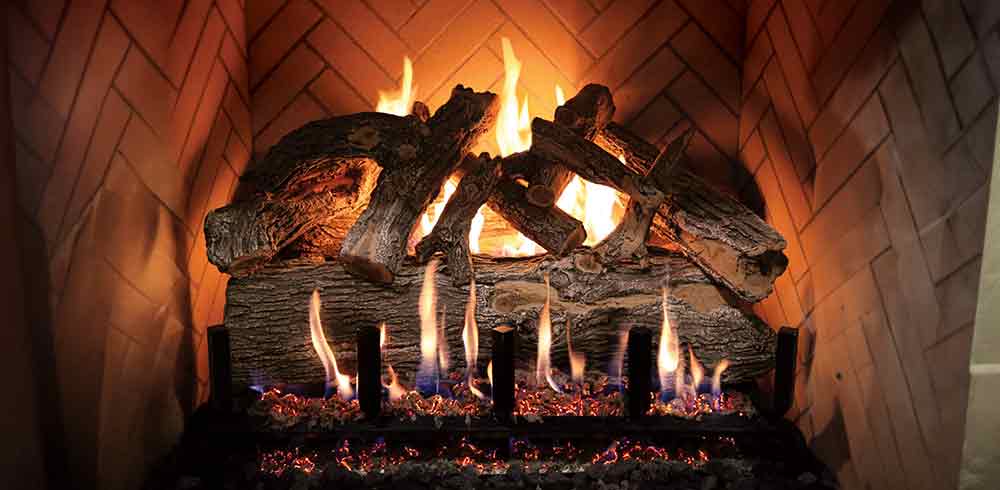
Place each log according to its placement chart, including any locator features. The approved layout establishes the intended relationship between the logs and flames. Do not rearrange it to imitate another product photograph.
Any decorative additions must be expressly approved. Check compatibility before choosing gas log burners or replacement logs for an existing system.
6. Complete Startup and Operating Checks
Before regular use, have the installer complete the manufacturer’s startup procedure and verify ignition, controls, pilot operation where fitted, and the intended flame pattern. Confirm venting performance and any other required installation checks.
Resolve delayed ignition, unusual soot, repeated shutdowns or smoke entering the room before further use. Do not try to correct an unfamiliar flame pattern by moving logs or adjusting gas components yourself.
Ask the installer to demonstrate:
- The correct lighting and shutdown procedures.
- Damper, screen and fireplace-door positions during operation.
- What the remote controls and how its batteries or power supply are maintained.
- Any first-use curing procedure and operating restrictions.
- Which routine cleaning tasks the homeowner may perform.
- When to stop using the system and arrange service.
Complete required inspections and retain the manuals, model information and installation documentation.
5 Common Gas Log Set Installation Mistakes to Avoid
| Mistake | What to Do Instead |
|---|---|
| 1. Choosing an incompatible or oversized system | Confirm fireplace approval and every required dimension for the exact burner, logs and controls. |
| 2. Assuming venting or damper settings | Have the chimney and operating arrangement checked against the selected system’s instructions. |
| 3. Overlooking local and room requirements | Confirm permitted use, clearances, combustion-air provisions and inspection requirements before installation. |
| 4. Improvising log or media placement | Use the exact placement diagrams and approved materials, quantities and accessories. |
| 5. Skipping final checks or ongoing service | Complete installation testing, demonstrate operation and establish the manufacturer’s maintenance schedule. |
Maintain the Installation After the First Fire
Schedule professional inspection and service at the intervals specified by the manufacturer. The burner, pilot, controls and applicable chimney or air-supply arrangements need attention even though gas logs do not produce wood ash.
Let the appliance cool and follow its shutdown instructions before permitted cleaning. Use the approved method for the log material, and do not disturb the placement. Keep air openings and the surrounding area clear as directed.
Maintain smoke and carbon monoxide alarms according to their instructions. Do not burn wood, paper or other solid fuels in a fireplace while the gas log system is installed.
If you smell gas, do not light the appliance, operate electrical switches or use a phone inside. Leave the building and contact the gas supplier or emergency services from outside.
Gas Log Installation Checklist
- Fireplace and gas log system compatibility confirmed.
- Correct natural gas or propane configuration verified.
- Firebox dimensions and surrounding clearances checked.
- Fireplace and chimney inspection, cleaning and repairs completed as needed.
- Venting, damper and combustion-air requirements addressed.
- Approved gas connections and controls installed and tested.
- Burner, logs and media positioned according to the diagrams.
- Startup checks and required inspections completed.
- Owner shown correct operation and given the manuals.
- Maintenance and service requirements recorded.
Frequently Asked Questions
Can I install a gas log set myself?
Check the appliance instructions and local requirements before planning homeowner installation. Gas-supply work, connections, testing and startup should be handled by a qualified professional. Physical fit alone does not establish that an installation is suitable.
Do vented gas logs need a damper clamp?
Many vented gas log systems require a clamp or another specified method of maintaining a minimum permanent damper opening. The exact requirement comes from the appliance instructions and applicable installation rules. A clamp does not replace any additional damper opening required during operation.
Can I operate gas logs with the fireplace glass doors closed?
Do not assume you can. Many gas log systems require existing fireplace glass doors to remain fully open during operation and may require a screen. Follow the instructions for both the log system and fireplace enclosure.
Can I reuse the old gas connector or control valve?
Only if a qualified installer establishes that the component is permitted for reuse, in suitable condition and compatible with the new installation. Do not assume a part is reusable because it physically connects or served the previous log set.
Can I add extra embers, glass or decorative logs after installation?
Only use additions specifically permitted for the exact burner and log configuration. Follow the approved quantity and placement instructions. Extra media can interfere with burner openings, ignition or the intended flame pattern.
What should I do if the new log set produces soot or lights abnormally?
Stop using the appliance and have a qualified technician assess it before further operation. Do not rearrange logs or adjust gas components by trial and error. If you smell gas, leave the building without operating switches or phones inside, then contact the gas supplier or emergency services from outside.
Final Thoughts
A successful gas log installation brings the fireplace, fuel supply, burner, controls and venting together as a compatible system. Plan the complete installation, follow the exact instructions and resolve any operating concerns before regular use.
Explore gas log sets at Fireplaces Direct. For help comparing products and compatible components, call 877-374-2070 or contact our product specialists with your model information and installer’s specifications. Your qualified installer handles site assessment, gas work and installation testing.
Working on a client’s fireplace? Contractors, builders, designers and other trade professionals can apply for a free SpotixPro account for trade pricing and project support.