
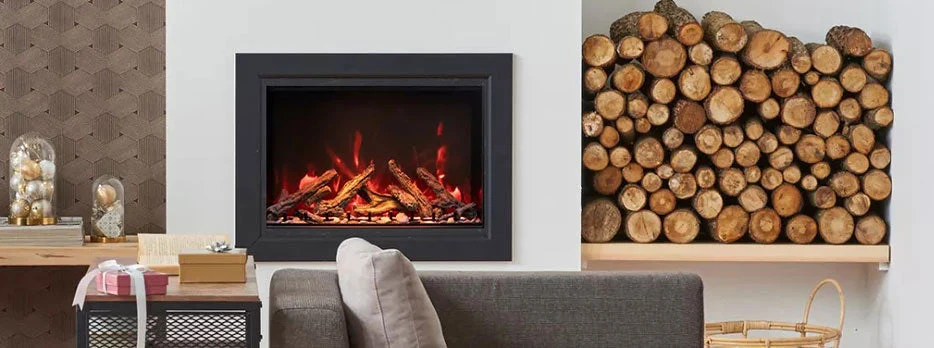
Gas fireplace logs can give a compatible existing fireplace the appearance of a wood fire without hauling firewood or removing wood ash. Choosing the right set starts with the fireplace itself: confirm the approved installation, then compare vented or vent-free operation, fuel type, burner size and controls.
This gas fireplace logs buying guide explains how the systems work and what to compare before ordering. Explore gas log sets with those requirements in mind, rather than choosing by log appearance alone.
What Are Gas Fireplace Logs?
A gas log system combines decorative logs with a compatible gas burner and control arrangement. It creates real flames inside an approved fireplace or firebox. The logs themselves are not fuel; the burner uses the specified natural gas or propane supply.
A log set is different from a complete gas fireplace or fireplace insert. Those appliances have their own firebox and installation requirements. A separate log set cannot simply be placed inside an existing gas appliance unless that installation is specifically approved.
If your project requires a complete appliance, compare gas fireplaces or gas fireplace inserts before selecting logs.
First, Confirm Your Fireplace Is Suitable
Have a qualified installer identify the fireplace and assess the proposed installation. An opening that looks large enough does not establish that a log system can be installed there.
- Fireplace construction: Determine whether it is masonry, factory-built or another appliance type. Check its identification label and instructions where available.
- Condition: Have the firebox and, where applicable, chimney inspected and cleaned before installation.
- Approved application: Confirm that the selected log system is permitted in that fireplace and location.
- Surrounding materials: Review required clearances to mantels, trim and other combustibles.
- Gas supply: Have the installer confirm fuel type, supply capacity, pressure and connection requirements.
Review the appliance’s listing and applicable local requirements. A standards reference or certification label does not by itself establish approval for every fireplace, room or jurisdiction.
Do Gas Fireplace Logs Need to Be Vented?
There are two main categories: vented and vent-free, also called ventless. The permitted choice depends on the appliance, fireplace, room and local requirements.
| Consideration | Vented Gas Logs | Vent-Free Gas Logs |
|---|---|---|
| Exhaust arrangement | Require an approved, functioning chimney and the specified damper opening. | Operate without a dedicated exhaust flue in an approved installation, subject to room and air-supply requirements. |
| Primary consideration | Commonly selected for a decorative fire view. | May provide supplemental room heat where permitted and suitable. |
| Heat in the room | A significant portion of combustion heat exits through the chimney. | Combustion products, including moisture, enter the room rather than being exhausted through a flue. |
| Before purchasing | Confirm fireplace compatibility, chimney condition and venting requirements. | Confirm local permission, approved room, combustion-air provisions and all operating restrictions. |
Vented Gas Log Sets

Vented gas log sets are worth considering when the appearance of the fire is the main goal. Log shapes, burner design and ember effects influence the finished presentation.
The chimney and damper arrangement must meet the selected system’s instructions, including any required device that maintains a minimum opening. Do not close the damper to try to retain more heat while using a vented set.
Vent-Free Gas Log Sets

Vent-free gas logs may suit a supplemental-heating project where the installation is permitted. They still require an approved fireplace or firebox, adequate combustion air and compliance with the model’s room and operating restrictions.
These systems use an oxygen-depletion-sensing pilot, often called an ODS, designed to shut down operation under specified low-oxygen conditions. It is not a carbon monoxide detector or a guarantee against every unsafe condition. Maintain required alarms and follow the manufacturer’s service instructions.
Do not assume all vent-free sets use the same damper position or can be installed in any room. Have the exact installation reviewed before purchasing.
Choose the Correct Fuel: Natural Gas or Propane
Order the configuration that matches the actual fuel supply at your fireplace. Do not infer fuel type from whether your home is in a city or rural area.
Natural gas and propane systems use fuel-specific components. Have a qualified gas professional verify the supply and the appliance requirements. Local fuel rates, usage and any standing-pilot consumption affect operating cost; neither fuel is automatically less expensive for every household.
Do not assume a set can be converted later. Some systems are not field-convertible, and any permitted conversion requires the manufacturer’s specified parts and procedure.
How Do Gas Fireplace Logs Work?
The burner distributes the specified gas, and the ignition and valve arrangement controls operation. Decorative logs and any approved ember materials create the visible fire presentation. Flame-safety features depend on the system.
A purchase may include a complete package or only part of the system. Check whether the listing includes:
- The decorative logs in the selected style and size.
- The compatible burner, grate or support assembly.
- The required valve and ignition configuration.
- A remote or wall control, if offered.
- Approved ember materials and decorative covers.
- Any required accessories identified in the installation instructions.
Choose gas log burners and replacement components by exact compatibility. Matching brand names or advertised log sizes is not enough to establish that parts work together.
Compare Ignition and Control Options
Choose the control system when selecting the burner. Remote operation, flame adjustment and electronic pilot ignition are separate capabilities, so confirm exactly what the chosen configuration supports.
Match-Lit Systems
A match-lit system uses manual lighting and gas control without a standing pilot. Availability is limited by the burner, fuel and permitted installation. Some manufacturers offer match-lit configurations for natural gas only. Follow the exact lighting procedure in the manual rather than a generic sequence.
Manual Safety-Pilot Systems
A manual safety-pilot system uses a pilot and a compatible safety valve. The homeowner operates the appliance using the specified controls. Review how the pilot is lit and whether it normally remains on between uses.
Remote-Capable Standing-Pilot Systems
Some standing-pilot systems support an approved remote or switch. Basic configurations may provide on/off operation; others offer flame adjustment. Remote capability does not necessarily mean the handset can ignite a pilot that is off.
Electronic Ignition Systems
Electronic systems use an electrical power source to initiate ignition. Depending on the model, they may offer an on-demand pilot, remote operation or other control functions. Confirm battery, household-power and backup requirements, along with any selectable pilot modes.
Browse fireplace remotes only after identifying the controls approved for your burner and valve system.
Check Gas Log Size and Firebox Fit
Record the fireplace’s front width, rear width, height and depth. Compare those measurements with the manufacturer’s minimum firebox dimensions for the complete burner and control configuration.
The advertised log size is not the required fireplace-opening size. Valves, receivers and burner components need the space and placement specified in the instructions. A tapered firebox can also limit the available fit even when its front opening appears wide.
Use measurements to narrow the choices, then have your installer confirm fit and clearances before ordering. Do not use a universal extra-clearance rule in place of the model’s requirements.
Choose the Log Style and Fire Presentation
Once compatibility is established, compare the appearance you want. Bark texture, wood species styling, charring, log proportions and ember effects all influence the look. Log materials vary, so compare each manufacturer’s care and performance information rather than assuming one material always lasts longer.
- Traditional logs: Compare natural-looking shapes and details as part of the complete approved burner presentation.
- See-through sets: Select a system approved for the fireplace’s multi-sided configuration and intended viewing arrangement.
- Reversible logs: Use only the appearance options and placement arrangements permitted in the instructions.
- Contemporary media: Explore modern gas log sets and fire glass when you prefer a different visual style.
Do not replace logs with glass, stones or fireballs unless the exact burner permits that media. Decorative additions and log placement can affect combustion, so follow the approved layout rather than arranging the firebox freely.
Do Gas Log Sets Give Off Heat?
Gas flames produce heat, but the useful heat delivered to the room depends on the system and installation. Vented decorative logs lose substantial heat through the open chimney. Vent-free systems may provide supplemental heat, but room suitability and operating restrictions still apply.
A burner’s BTU-per-hour input describes its fuel-energy consumption rate. It is not the same as measured heat delivered to the room. Avoid choosing solely by the largest input number if your goal is comfortable room heating.
How Much Do Gas Logs Cost to Buy and Run?
Compare complete configurations rather than the price of decorative logs alone. Your project budget may include the burner, controls, required accessories, chimney preparation, gas-supply work and professional installation.
Operating cost depends on the fuel input at the setting used, run time, pilot consumption and your local fuel rate. Use the appliance specifications and your utility or propane supplier’s billing units for an estimate. A generic hourly price will not represent every home.
Ask for an itemized installation estimate before finalizing the order, and allow for routine inspection and service.
Cleaning and Maintaining Gas Fireplace Logs
Gas logs avoid wood ash, but they still need inspection and care. Follow the manufacturer’s maintenance schedule and have a qualified technician inspect the burner, ignition, controls and venting or air-supply arrangements as applicable.
Let the system cool and follow the specified shutdown procedure before permitted cleaning. Use only the method approved for the log material. Do not assume soap, water, brushes or household cleaners are suitable for every set.
Do not move logs or ember materials unless the instructions permit it, and restore the exact approved placement. Have unusual soot accumulation, repeated pilot shutdowns or abnormal ignition investigated rather than repeatedly cleaning or relighting around the problem.
Before You Order: Gas Log Set Checklist
- Identify the fireplace and confirm the approved application.
- Choose vented or vent-free operation based on suitability and local requirements.
- Verify the actual natural gas or propane supply.
- Check minimum firebox dimensions for the complete configuration.
- Select the compatible burner, logs and ignition system.
- Confirm which remote functions and accessories are included.
- Review chimney, combustion-air and clearance requirements with the installer.
- Compare the complete installation budget and ownership requirements.
Frequently Asked Questions
Can I put gas logs in any existing fireplace?
No. The fireplace must be approved for the selected log system, fuel and installation method. Firebox dimensions, construction, condition, chimney requirements and local restrictions all matter. An existing gas fireplace or insert is not automatically a suitable enclosure for a separate gas log set.
Can I buy replacement logs without replacing the burner?
Sometimes, but only when the replacement logs are specifically approved for the existing burner and configuration. Matching the advertised size or brand alone does not establish compatibility. Identify the burner model before ordering.
Can I add a remote to a manual gas log set?
Only if the burner and valve system support an approved control upgrade. A handheld remote alone cannot add remote operation to an incompatible manual valve. Confirm the complete control configuration and permitted accessories.
Can natural gas logs be converted to propane?
Only where the manufacturer expressly permits conversion of that exact system using its specified parts and procedure. Some gas log systems are not field-convertible. Choose the correct fuel configuration before ordering and have permitted conversion work performed by a qualified professional.
Will gas logs work during a power outage?
Some manual or standing-pilot systems can operate without household electricity, while electronic systems have different power and backup requirements. Confirm the exact model’s capabilities. Decorative vented logs should not be assumed to provide dependable backup room heating.
How long do gas fireplace logs last?
Service life depends on the log material, use, maintenance and operating conditions. Have cracked, damaged or deteriorating logs assessed, and use only approved replacement parts. Follow the manufacturer’s inspection and replacement guidance rather than relying on a universal lifespan.
Is an odor from new gas logs always normal?
No. Some manufacturers specify an initial curing procedure, but an odor should not automatically be dismissed as normal. Follow the exact first-use instructions. If you smell gas, do not light the appliance; leave the building and contact your gas supplier or emergency services from outside.
Final Thoughts
Choosing gas fireplace logs starts with a compatible fireplace and the correct venting and fuel configuration. From there, compare burner presentation, controls, fit and ownership costs to find a system that suits the way you want to use your hearth.
Explore vented gas log sets and vent-free gas log sets at Fireplaces Direct. Need help comparing compatible options? Call 877-374-2070 or contact our product specialists with your fireplace details, measurements, fuel type and installer’s findings.
Specifying a log set for a client? Contractors, builders, designers and other trade professionals can apply for a free SpotixPro account for trade pricing and project support.