
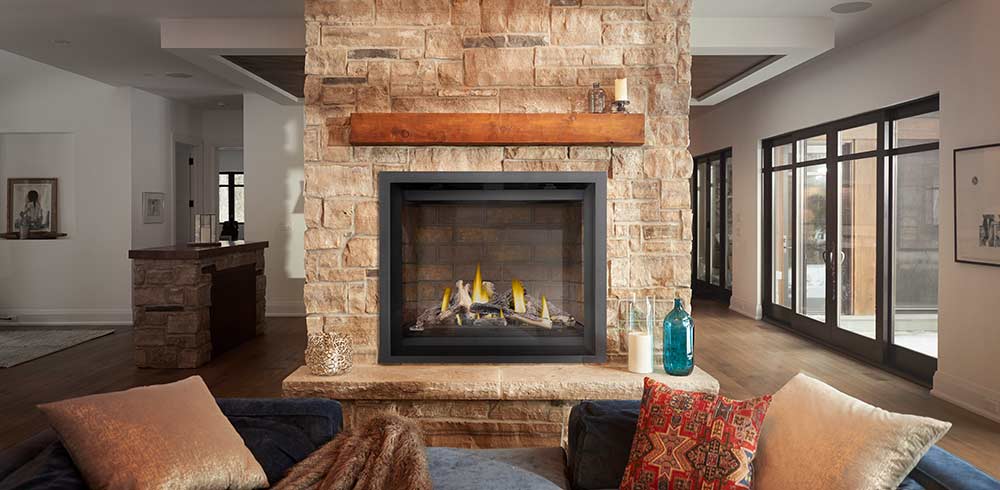
If you enjoy having a fireplace but are ready to leave firewood, ash and tending a fire behind, converting your existing wood fireplace to gas or electric may be worth considering. Both options offer more convenient operation, but they differ in flame appearance, heating capabilities and installation requirements.
The right wood fireplace conversion depends on your existing fireplace, available utilities and how you want to use the finished space. Start by deciding whether you want a real gas flame, an electric flame effect or a larger remodel that replaces the fireplace entirely.
What Are Your Wood Fireplace Conversion Options?
Converting a wood fireplace does not always mean removing it. Depending on compatibility, you may be able to install gas logs, a gas insert or an electric appliance within the existing opening.
- Gas logs: A gas burner and decorative logs installed in a compatible fireplace. This option can preserve much of the existing fireplace's appearance.
- Gas fireplace insert: A complete gas appliance designed for installation within a compatible existing fireplace.
- Electric insert or log set: An electric appliance that adds a flame effect, and sometimes supplemental heat, within a suitable fireplace opening.
- Full fireplace replacement: A larger remodeling project that removes the existing appliance or changes the opening to accommodate a different fireplace.
These options are not interchangeable. Before purchasing, identify whether your existing fireplace is masonry or factory-built. For a factory-built fireplace, locate its model information so your installer can check what modifications and appliances are permitted. Having enough physical space does not establish compatibility.
Converting a Wood Fireplace to Gas
Gas can be a good fit if you want a real flame without storing wood, building fires or removing wood ash. Your main choices are adding gas logs or installing a gas fireplace insert.
Gas Logs: Preserve the Existing Fireplace Look
Gas log sets combine decorative logs with a compatible burner system. They may suit homeowners who like their existing fireplace surround and want to keep an open-fireplace appearance.
Vented and vent-free gas logs have different installation and operating requirements. A vented set requires a suitable functioning chimney and the damper arrangement specified by the manufacturer. Vent-free products have additional room, application and local restrictions and are not an option for every fireplace or location.
If your goal is heating, check the intended use of the exact system. A decorative vented gas log set should not be assumed to provide the same heating performance as a gas insert.
Gas Inserts: Update the Firebox and Heating Experience
A gas fireplace insert installs within a compatible existing fireplace and provides its own firebox and viewing area. It is worth considering if you want an enclosed appliance and heating is an important part of the project.
Direct vent inserts use a sealed combustion system with a specified path for outside combustion air and exhaust. Your installer must confirm the required venting configuration, fireplace compatibility and clearances for the selected model.
Depending on the appliance, you may be able to choose decorative fronts, log styles, flame controls, blowers or remote controls. Confirm what is included and which accessories are compatible before ordering.
What a Gas Conversion Requires
A qualified installer should assess the existing fireplace and chimney, confirm appliance compatibility and plan the gas supply. The selected appliance must match the available fuel, natural gas or propane, with any permitted fuel conversion performed according to the manufacturer's instructions.
The project may also involve chimney repairs, venting or liners, electrical work, permits and finishing materials. An existing gas connection does not automatically establish that the supply is suitable for the new appliance.
Converting a Wood Fireplace to Electric

An electric fireplace is worth considering if your priority is convenient ambiance without combustion in the fireplace. It does not burn wood or gas, so the appliance does not require a combustion vent or produce wood ash.
Many models allow the flame effect to operate separately from the heater, making them useful for enjoying the fireplace's appearance in warmer weather. Check this feature on the model you select.
Electric Inserts and Log Sets
An electric fireplace insert can give a suitable existing opening a finished appearance. An electric log set may be another option when you want to retain more of the original firebox. Confirm that the product is intended for your proposed application.
Measure the opening's height, width and depth, including any narrowing toward the back. Account for trim, the power connection and required airflow around heater outlets. A product's nominal size alone is not enough to confirm fit.
Electrical and Chimney Planning
Some electric appliances plug into a suitable outlet, while others require hardwiring or a specific circuit. Check the installation manual and have an electrician evaluate any required electrical work. Do not assume every model can use the nearest outlet or an extension cord.
Although the electric appliance does not need a chimney for combustion exhaust, the existing chimney and fireplace still need attention. Have a qualified professional assess their condition and determine how to address drafts, moisture and the unused flue as part of the conversion.
Should You Choose Gas or Electric?
Flame Appearance and Style
Choose gas if a real flame is a priority. Choose electric if you prefer a flame effect with options such as adjustable colors, lighting or operation without heat, where offered. Both categories include traditional and contemporary designs, so changing fuel does not require giving up your preferred style.
Heating Expectations
Compare the exact appliances rather than assuming all gas or electric products perform alike. Gas logs, gas inserts and electric heaters serve different purposes. Some electric products are primarily decorative, while others provide supplemental heat.
Discuss your room size, layout and heating goals with a qualified professional. Neither a decorative flame nor an advertised heating-area figure guarantees that an appliance will meet your home's heating needs.
Installation and Operating Costs
Electric may involve less work when a compatible appliance fits the opening and a suitable power supply is available. Gas may require a new gas line and changes to the chimney or venting. Either project can become more involved if repairs, electrical upgrades or changes to the opening are needed.
Compare itemized installed prices, including labor, utility work, required components and finishing. For operating costs, use your local energy rates and the selected model's fuel consumption or electrical input. Heat settings, operating time and whether you use an electric flame effect without heat will affect the total.
Maintenance and Everyday Use
Both options eliminate firewood loading and wood-ash cleanup. Gas appliances still need inspection and service according to their instructions, including attention to burners, controls and venting where applicable. Electric models need manufacturer-directed cleaning and care, including keeping air openings unobstructed.
Compare controls as well. Remotes, thermostats, wall switches and other features vary by model; they should not be assumed included or universally compatible.
When Does Full Fireplace Replacement Make More Sense?
An insert or log set may not suit a damaged fireplace, an incompatible factory-built unit or a project that changes the opening significantly. If you want a different location, a larger viewing area or a new fireplace configuration, full replacement may be the better approach.
That is a remodeling project rather than a simple insert installation. Have the existing structure and proposed appliance evaluated before planning demolition, framing or finishes.
Wood Fireplace Conversion FAQs
Can Any Wood Fireplace Be Converted to Gas or Electric?
No. The available options depend on the existing fireplace's construction, condition, dimensions and manufacturer requirements, along with available utilities and local restrictions. A qualified professional should confirm compatibility before you purchase an appliance.
Do You Have to Remove the Chimney When Converting to Electric?
Chimney removal is not automatically required because an electric appliance does not need combustion venting. A qualified professional should determine how the existing chimney and unused flue will be maintained or decommissioned, including how to manage moisture and drafts.
Are Gas Logs the Same as a Gas Fireplace Insert?
No. Gas logs are a burner and decorative log system installed in a compatible fireplace. A gas insert is a complete appliance designed for installation within a compatible existing fireplace. Their installation requirements and heating capabilities differ.
Can You Burn Wood After Installing a Gas or Electric Appliance?
Do not burn wood while a gas or electric appliance is installed in the fireplace. Returning to wood use requires professional evaluation, removal of the added equipment as appropriate and confirmation that the fireplace and chimney remain suitable for wood burning.
Final Thoughts
Converting an existing wood fireplace can make it easier to enjoy your living space without managing a wood fire. Gas offers a real flame, while electric offers flame effects without combustion. The best choice depends on your fireplace's compatibility, your heating goals and the installation work involved.
Gather photos, opening measurements and any existing fireplace model information before shopping. Explore our gas fireplace inserts, gas log sets and electric fireplace inserts, or contact our product specialists for help narrowing down the options for your project.