
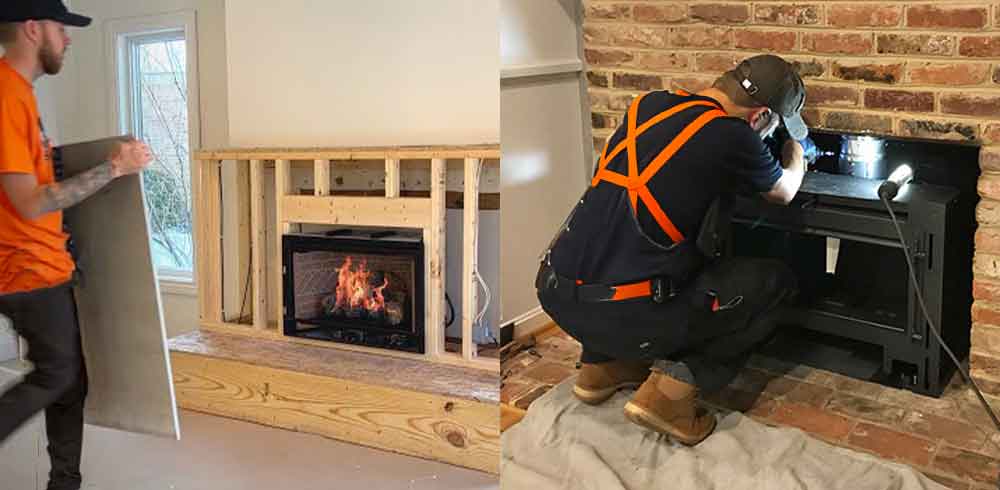
The main difference between a built-in fireplace and a fireplace insert is where the appliance is designed to go. A built-in fireplace is installed into an approved framed enclosure or surround. A fireplace insert generally fits inside an existing compatible fireplace opening. Both categories include different fuel types, and some electric models support more than one installation method.
Choosing between them starts with your home: are you adding a fireplace, updating an existing hearth, or replacing the original appliance? Understanding that starting point helps you compare the right fireplace options before considering appearance, heat output and total project cost.
Built-In Fireplace vs. Fireplace Insert at a Glance
| Consideration | Built-In Fireplace | Fireplace Insert |
|---|---|---|
| Installation location | An enclosure or surround constructed for the appliance. | An existing compatible fireplace, with exceptions for certain electric models. |
| Typical project | Adding a fireplace or replacing an existing built-in appliance. | Updating an existing fireplace while retaining a suitable surrounding structure. |
| What determines fit | Approved framing dimensions, clearances, utilities and applicable venting. | Existing fireplace approval, interior dimensions, clearances and applicable venting. |
| Design flexibility | More opportunity to plan the location, opening and surrounding wall during construction. | Dimensions are influenced by the existing opening; fronts and surrounds can update its appearance. |
| Venting | Depends on fuel, appliance design and approved installation. | Vented gas and wood models typically use an approved chimney or liner arrangement. Electric models do not need combustion venting. |
| Heating performance | Depends on the specific model, fuel and heating design. | Depends on the specific model, fuel and heating design. |
| Project cost factors | Appliance, enclosure, finishing, utilities, venting and labor. | Appliance, front or surround, fireplace condition, utilities, liners or venting and labor. |
What Is a Built-In Fireplace?
A built-in fireplace is a complete appliance designed to be installed into an enclosure or surround that meets its installation requirements. It can become part of a new wall, a planned fireplace feature or a remodel that replaces an older unit.

Options include built-in wood-burning fireplaces, built-in gas fireplaces and built-in electric fireplaces. Their framing, finishing and venting requirements vary, so the installation manual should guide the project from the beginning.
A built-in fireplace does not have to go into a newly constructed home. It can also be added during a renovation, provided the proposed location supports the appliance's construction, utility and installation requirements.
What Is a Fireplace Insert?
A fireplace insert is a separate appliance generally designed to fit inside an existing compatible fireplace. It can update the appearance and operation of the hearth while allowing you to retain an approved existing fireplace structure.

The insert's dimensions are only part of the decision. The original fireplace, chimney condition, required clearances and the insert's installation approvals must also suit the project. An opening that looks large enough does not establish compatibility.
Gas Fireplace Inserts
A gas fireplace insert gives an existing compatible fireplace a gas-fueled appliance with its own burner and controls. Models may be available in natural gas or propane configurations; the selected appliance must match the approved fuel supply.
Direct-vent gas inserts use the manufacturer's specified venting arrangement, commonly liners routed within the existing chimney. Vent-free gas inserts have different installation and operating requirements and are restricted in some locations. Confirm the appliance's approvals and local requirements before choosing one.
Wood-Burning Fireplace Inserts
A wood-burning fireplace insert provides a wood fire within an appliance designed for an approved existing fireplace. Its installation requires an appropriate chimney and connection or liner system, along with the clearances and hearth protection specified by the manufacturer.
Electric Fireplace Inserts
An electric fireplace insert creates a flame display without burning fuel. Models with a heater can also provide supplemental warmth, and they do not need a chimney to exhaust combustion gases.
Some electric inserts are approved for installation in either an existing fireplace opening or custom framing. Others have more limited installation options. Check the exact model's instructions rather than relying only on the word “insert” in its name.
Installation Requirements: What Changes Between the Two?
Built-In Fireplace Installation
A built-in project involves preparing an approved enclosure and coordinating the surrounding construction. Depending on the model, that may include framing, required noncombustible materials, a gas supply, electrical work and a new venting route.
Plan the fireplace before finalizing the mantel, television location, cabinetry or wall finish. The appliance's clearances, service access and finishing instructions affect how these elements can be arranged.
Fireplace Insert Installation
An insert project starts by evaluating the existing fireplace. A qualified installer should confirm its type, condition and suitability for the proposed insert, then assess dimensions, utilities, clearances and applicable chimney work.
Factory-built fireplaces need particular attention: review the original fireplace and insert listings and instructions before assuming the combination is permitted. Do not cut, resize or remove fireplace components simply to make an insert fit.
Both projects may involve chimney and venting components, but existing pipe is not automatically reusable. Use only the system approved for the new appliance. Gas connections, chimney work and electrical changes require appropriately qualified professionals.
Which Option Fits Your Fireplace Project?
You Want to Add a Fireplace Where There Is None
A built-in fireplace is often the relevant starting point because the project can include an enclosure designed around the appliance. Consider the available space, fuel supply and any required venting route. An electric model approved for framing may provide another option, including certain products marketed as inserts.
You Want to Update an Existing Masonry Fireplace
An insert may suit the project if the existing fireplace and chimney are appropriate for the model. It can update the hearth without starting with removal of the entire masonry fireplace. Inspection and compatibility checks still come before product selection.
You Want to Replace an Existing Factory-Built Fireplace
First identify the current appliance. Installing an approved insert into an existing fireplace and removing that fireplace to install a new built-in unit are different projects. An installer can assess which approach is permitted and what changes the enclosure, finishes and venting would need.
Aesthetics and Design Flexibility
Built-in fireplaces offer an opportunity to plan the fire feature and surrounding wall together. Depending on the model, that can include a traditional opening, a linear design or another approved configuration.

An insert works within the dimensions of its host fireplace, but it can still create a substantial visual change. A compatible front or surround can finish the opening, while available interior panels and log presentations vary by model.

Compare the finished viewing area as well as the outer dimensions. The surround, visible frame and existing hearth can influence the final appearance just as much as the appliance's nominal size.
Heating Efficiency: Is a Built-In Fireplace or Insert Better?
Neither category is automatically the better heater. Fuel type, combustion design, efficiency ratings, heat output and the room's heating needs matter more than whether the appliance is called a built-in fireplace or an insert.
A suitable heating insert can improve the performance of an existing open wood-burning fireplace, but that does not establish that every insert outperforms every built-in model. Electric flame displays may include supplemental heat or be designed primarily for appearance.
Compare the actual models you are considering and discuss your room, climate and heating goals with a product specialist. Avoid choosing solely by appliance width or a general square-footage claim.
Compare Total Project Cost
An insert can make use of an existing suitable fireplace, while a built-in project may involve constructing or replacing an enclosure. That difference affects the work involved, but it does not determine which project will cost less overall.
Include the appliance, approved front or surround, venting or liners, utility work, required repairs, finishing materials and labor in each estimate. An existing chimney that needs repairs can change an insert project's budget, while enclosure and finish choices can change a built-in project's cost.
Compare complete proposals for your home rather than appliance prices alone.
What to Gather Before You Shop
- Your starting point: A new fireplace location, existing masonry fireplace or existing factory-built appliance.
- Identification: The existing fireplace's brand, model and rating-plate information, when applicable.
- Measurements: For an insert, record the opening and interior dimensions, including front and rear widths, height and depth. Compare them with the model's installation diagrams.
- Photos: Show the fireplace opening, surrounding hearth and mantel, and any accessible identification labels.
- Utilities and venting: Identify the available fuel supply, electrical connection and existing chimney or venting arrangement.
- Your goals: Decide how much weight to give appearance, supplemental heat, fuel preference and the extent of renovation.
These details help narrow your options. Final compatibility, clearances and installation requirements still need to be confirmed for the selected appliance.
Frequently Asked Questions
Is a gas log set the same as a gas fireplace insert?
No. A gas log set uses a burner and decorative logs installed in an approved fireplace. A gas fireplace insert is a separate appliance designed for a compatible existing fireplace opening. They have different installation, venting and operating requirements.
Does zero-clearance mean a built-in fireplace needs no clearances?
No. Zero-clearance describes an appliance designed for installation in a specified enclosure under its listing. Required clearances, standoffs, finishing materials and mantel limits still come from the installation manual.
Can I reuse the existing chimney or venting with a new fireplace?
Only when the new appliance's installation instructions approve the proposed system and its condition is suitable. An insert may require approved liners within the existing chimney, while a replacement built-in fireplace may require a different venting system. Have compatibility assessed before purchasing.
Do I have to remove the original fireplace to install an insert?
An insert generally fits within an existing compatible fireplace, so removing the entire original fireplace is not normally the starting point. Any permitted alterations depend on the existing fireplace and insert instructions. Replacing the original fireplace with a new built-in appliance is a different project.
Can an electric fireplace insert be installed in a framed wall?
Some electric models are approved for both an existing fireplace opening and a framed enclosure. Others have different installation limits. Check the exact model's approved installation methods, framing requirements, clearances and electrical instructions before choosing it.
Final Thoughts
The difference between a built-in fireplace and a fireplace insert starts with the installation. A built-in appliance needs an approved enclosure, while an insert generally needs an existing compatible fireplace. From there, the right choice depends on the specific model, your home's structure, fuel options, design goals and heating needs.
Need help deciding which option fits your project? Contact our Fireplaces Direct product specialists with your measurements, photos and existing fireplace information. We can help you compare products and identify the installation details to review with your qualified installer.
Planning fireplace projects for clients? Contractors, builders, designers and other trade professionals can apply for a free SpotixPro account for trade pricing and project support.