
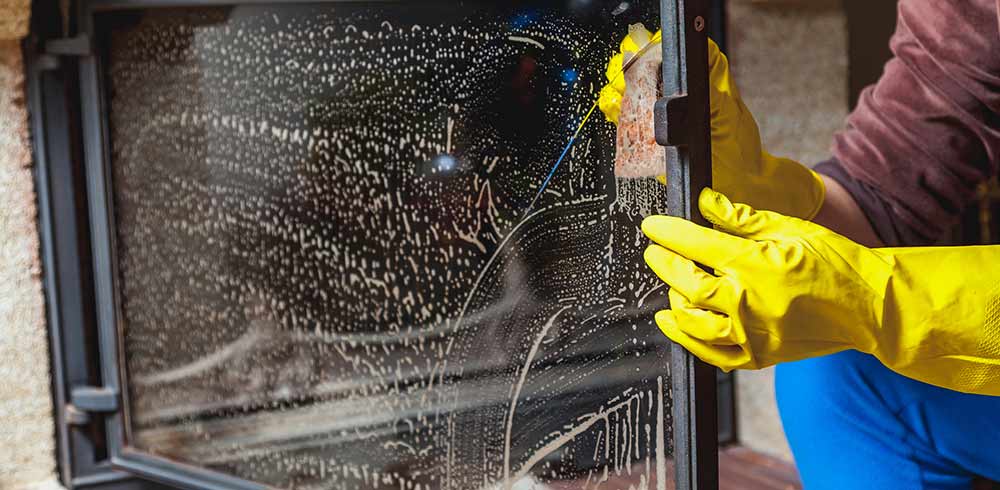
Gas fireplaces need regular cleaning and maintenance, including manufacturer-approved glass care, routine dust removal and professional inspection or servicing. The right schedule depends on your appliance, how often you use it and the tasks listed in its owner's manual.
Keeping your fireplace in good condition means looking beyond the glass. Logs, decorative media, seals, controls and venting each have their own care requirements. Understanding what you can clean yourself and what needs a technician helps you maintain your fireplace throughout the year.
Do Gas Fireplaces Need to Be Cleaned?
Yes. Although gas fireplaces do not leave behind the same wood ash as a wood-burning fireplace, dust and deposits can still accumulate. Glass may develop a film, accessible surfaces collect household dust, and components need periodic attention.
Cleaning also provides an opportunity to notice changes such as damaged glass, deteriorated seals or unusual deposits. Surface cleaning alone does not establish that the burner, gas controls or exhaust system are operating correctly.
Start by identifying your appliance. Gas fireplaces and inserts, vent-free appliances and gas log sets can have different construction and maintenance instructions. Use the manual for your exact model.
How Often Should You Clean a Gas Fireplace?
Follow the manufacturer's maintenance schedule rather than treating every task as an annual cleaning job. Glass and accessible surfaces may need attention between service visits, while burner, control and venting checks may belong to a qualified technician.
- Routine cleaning: Remove dust and clean accessible surfaces as directed by the manual and as conditions require.
- Glass care: Clean at the interval specified for your model. Some manufacturers also require cleaning after initial use to remove deposits associated with the appliance's curing process.
- Inspection and servicing: Arrange the professional service specified for your appliance. Chimneys, fireplaces and vents should be inspected at least annually, with cleaning and repairs completed as needed.
- Changes in condition: Have unusual soot, damaged components or operating problems assessed rather than waiting for the next scheduled visit.
Before heating season is a useful time to review the schedule, but regular use may call for additional care during winter. An annual inspection and a glass-cleaning appointment are different tasks.
What Can You Clean Yourself?
Your owner's manual should identify homeowner maintenance and tasks requiring qualified service. Use the table below as a starting point, then follow the instructions for your appliance.
| Maintenance Area | Homeowner Care | Professional Attention |
|---|---|---|
| Exterior surfaces and dust | Clean accessible areas using the methods permitted by the manual. | Inaccessible areas or cleaning that requires service disassembly. |
| Glass assembly | Clean cool glass if the manual allows homeowner access and cleaning. | Damaged glass, deteriorated seals or uncertainty about reassembly. |
| Logs and decorative media | Use only the approved cleaning method and required placement. | Damaged logs, unusual deposits or placement that cannot be confirmed. |
| Burner, pilot and gas controls | Complete only tasks explicitly assigned to the homeowner. | Gas-pressure checks, valve work and technical ignition or sensor service. |
| Chimney and venting | Notice obvious damage or debris where visible safely from the ground. | System inspection, suspected blockages, inaccessible areas and repairs. |
How to Clean Gas Fireplace Glass
Clear glass makes the flame presentation easier to enjoy, but the cleaner and access procedure need to match the appliance. Follow these steps alongside your owner's manual.
- Check the instructions and choose the right cleaner. Confirm that glass cleaning is a homeowner task. Use the product and tools specified for the glass, including any special coatings.
- Shut down the fireplace and let it cool completely. Follow the manufacturer's instructions for the burner, pilot, gas supply and electrical power before maintenance.
- Access the glass as directed. Some assemblies use latches or retainers; others require a different procedure. Remove the glass only when the manual permits it, and protect it from impacts while handling it.
- Clean using the approved method. Follow the cleaner's instructions and the appliance manual. Avoid scraping, abrasive pads or chemicals that the manufacturer has not approved.
- Check the assembly before reinstalling it. Look for damage to the glass or seals. Have damaged components evaluated before using the fireplace.
- Reassemble before operation. Secure the glass and reinstall required barriers and panels according to the manual. Never operate a sealed gas fireplace with its glass removed or damaged.
If you cannot confirm how to remove or reinstall the assembly, have a qualified technician complete the cleaning. Appropriate fireplace accessories should be selected for the appliance and the task.
Cloudy Film and Soot Need Different Attention
Some gas fireplace manuals describe glass film associated with initial curing and give specific cleaning instructions for it. Follow those instructions rather than letting deposits build up.
Dark soot or a deposit that quickly returns should not simply be dismissed as normal. It may call for an assessment of combustion, component placement or other operating conditions. Have unusual deposits checked instead of repeatedly cleaning the glass without addressing the cause.
Cleaning the Exterior and Accessible Areas
With the fireplace shut down and cool, remove dust from exterior trim, barriers and other accessible areas using the methods allowed by the manual. The finish may need different care from the glass.
Keep required airflow openings clear. Do not spray cleaning liquid into controls or electrical components, and do not remove service panels or internal parts unless the manual assigns that task to the homeowner. If vacuuming is permitted, follow the instructions for suitable equipment and where it can be used.
Cleaning Gas Logs and Decorative Media
Gas logs can have different materials and finishes, so there is no single washing method that applies to every set. Do not soak, scrub or wipe logs with water unless the manufacturer allows it.
If logs must be removed for approved cleaning, follow the placement diagram when reinstalling them. Their arrangement affects burner operation; do not reposition them to change the appearance of the flame. Have damaged logs evaluated for approved replacement.
Decorative fireplace media, including fire glass, lava rock and ceramic media, also needs appliance-specific care. If washing fire glass is permitted, follow the approved method and let it dry completely before reinstalling it. Use the required quantity and placement, keeping specified burner and pilot areas unobstructed.
Cleaning Burners, Pilot Assemblies and Flame-Sensing Components
Burners, pilots and flame-sensing components need attention according to the service instructions. Different fireplaces use different systems, and a fireplace that shuts off does not automatically have a dirty thermocouple.
Do not apply a generic sanding or polishing procedure to a thermocouple, thermopile or flame sensor. Complete only the cleaning specifically assigned to the homeowner in the manual. Leave gas adjustments, valve work and technical diagnosis to a qualified service professional.
Repeated ignition failures, a pilot that will not remain lit or unexplained shutdowns require assessment. Cleaning visible surfaces is not a substitute for diagnosing the operating problem.
Chimney and Venting Maintenance
The exhaust system needs to be considered alongside the fireplace. Direct-vent gas appliances use dedicated venting and may not have a traditional masonry chimney. Vented gas log sets installed in approved wood-burning fireplaces use a different arrangement, while vent-free appliances do not exhaust through an outdoor vent.
For a vented system, have its condition and any suspected obstruction checked. A technician can assess the appropriate cleaning and repairs for that installation. Do not assume every gas fireplace needs the same chimney-sweeping procedure.
If replacement chimney or venting components are needed, use parts approved for the appliance and venting system. Similar dimensions do not establish compatibility.
What Changes for Vent-Free Gas Fireplaces?
Vent-free fireplaces still need cleaning and servicing even though they do not have an outdoor exhaust vent. Follow the manual's requirements for room conditions, combustion air, burner and pilot care, and component placement.
Do not treat visible soot, repeated shutdowns or unusual persistent odors as routine cleaning issues. Have the appliance checked before continued use.
Should I Have My Gas Fireplace Professionally Cleaned?
Professional servicing is valuable for the parts of the system that surface cleaning cannot address. Follow the manufacturer's service schedule and use a qualified technician familiar with your fireplace type.
Depending on the model and installation, an inspection or service visit may include:
- Glass assembly and seals: Checking for damage, deterioration and correct fit.
- Firebox condition: Looking for corrosion, unusual deposits or damaged components.
- Logs and media: Confirming condition and the required arrangement.
- Burner and ignition: Evaluating operation and completing the prescribed cleaning or service.
- Gas controls and connections: Performing the checks specified for the appliance.
- Venting: Assessing applicable exhaust components, terminations and suspected obstructions.
Ask what the service visit includes. Separately, test your home's smoke and carbon monoxide alarms according to their manufacturers' instructions rather than assuming this is included in a fireplace appointment.
If you smell gas or a carbon monoxide alarm sounds, leave the affected area and seek emergency assistance from a safe location. Do not continue cleaning or troubleshooting inside the affected space.
Frequently Asked Questions
Can I use regular household glass cleaner on a gas fireplace?
Use the cleaner specified by your fireplace manufacturer. A household window cleaner may not be suitable for the glass or its coatings. Check the owner's manual before using ammonia-based products, abrasives or homemade cleaning mixtures.
Can I clean gas logs with water?
Only if the manufacturer explicitly permits it for those logs. Cleaning methods depend on the material and finish, and washing or soaking can damage some products. Follow the log or fireplace manual and preserve the required log arrangement.
Does a gas fireplace need maintenance if I rarely use it?
Yes. Low use does not eliminate inspection or maintenance needs. Dust, deterioration and obstructions can develop during periods of nonuse. Follow the manufacturer's service schedule and arrange the inspections applicable to the appliance and its venting system.
Do gas fireplace inserts need cleaning and maintenance?
Yes. Gas inserts still need the glass, controls, burner system, seals and applicable venting checked and maintained according to their manuals. Access and cleaning procedures can differ from built-in fireplaces, so use the instructions for the exact insert model.
Final Thoughts
Gas fireplace cleaning and maintenance works best when each task matches the appliance. Keep up with approved surface and glass care, preserve the required log and media arrangement, and arrange professional inspection and service when needed.
Need help finding an accessory, compatible control or replacement product? Contact our Fireplaces Direct product specialists with your fireplace brand and model number. For on-site inspection, cleaning or repair, work with a qualified local service professional.
Working on fireplace projects for clients? Contractors, builders, designers and other trade professionals can apply for a free SpotixPro account for trade pricing and project support.