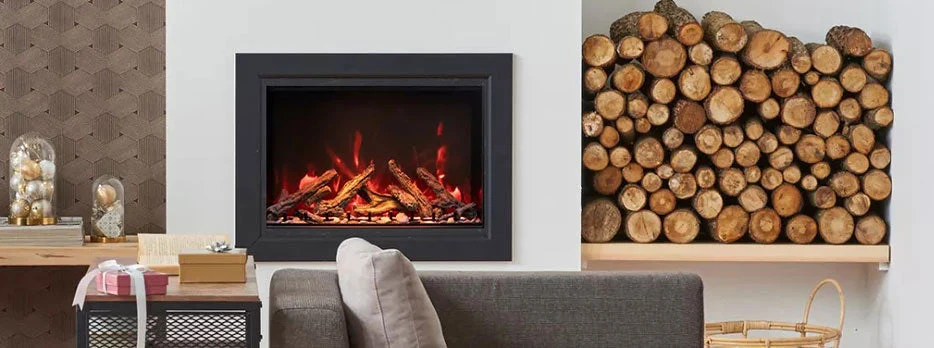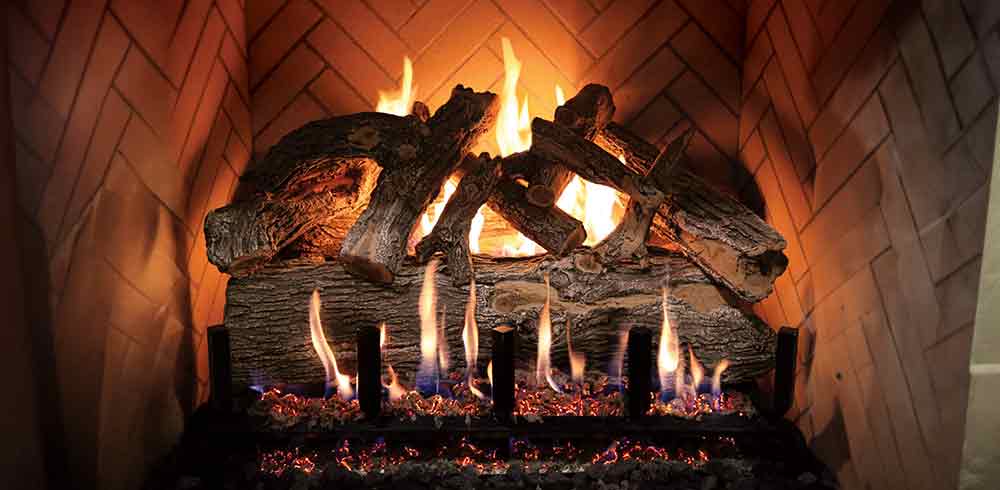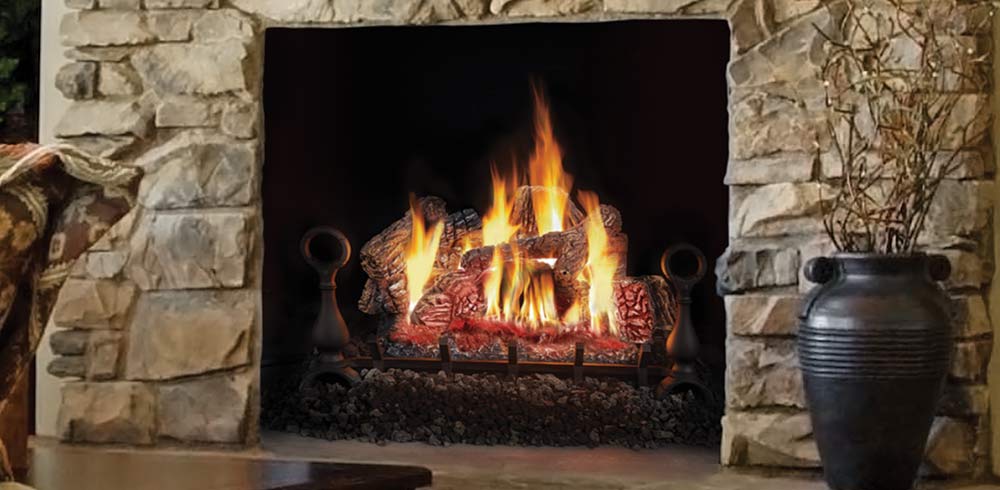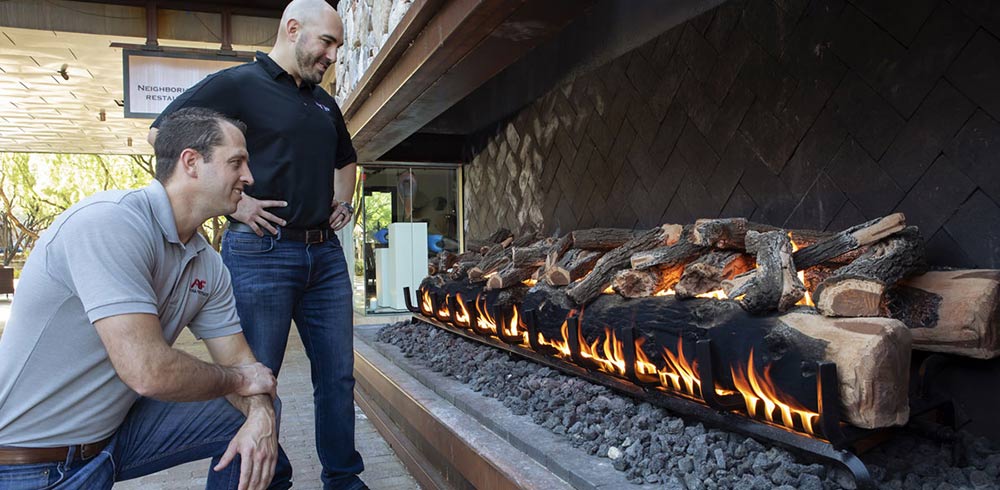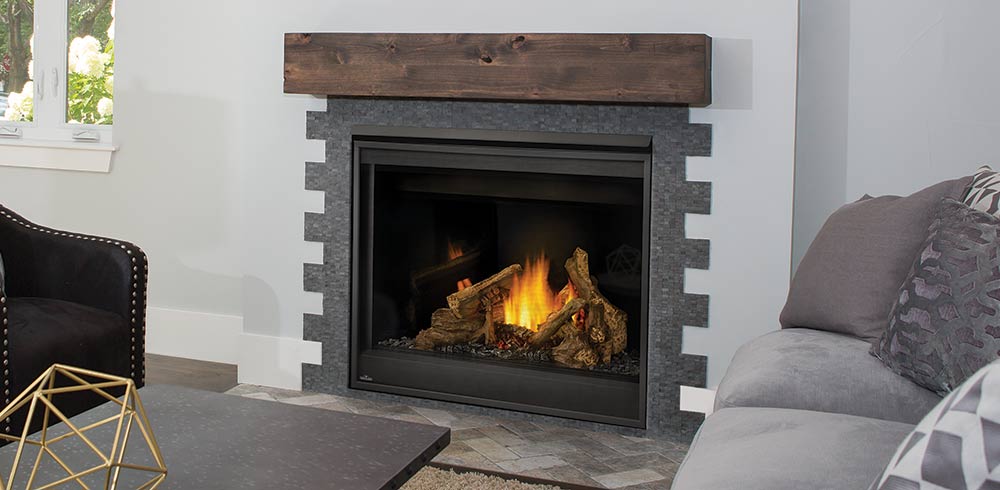
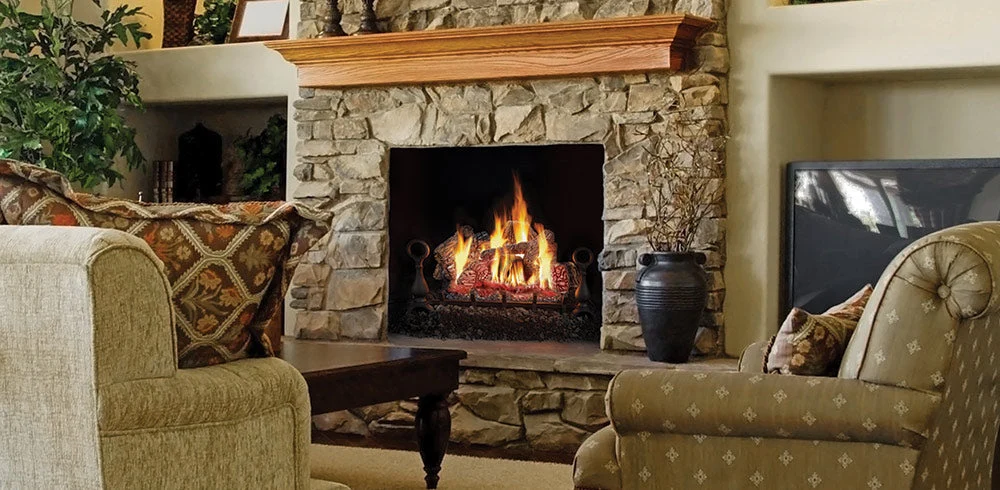
A ventless gas log set, also called a vent-free gas log set, provides a gas flame and supplemental heat without venting combustion exhaust outdoors. Choosing one starts with confirming that vent-free appliances are permitted where you live and that your fireplace and room meet the requirements for the specific set.
Once you establish compatibility, you can compare sizes, fuel types, controls, and log styles. This guide explains what to check before shopping for a ventless gas log set for your home.
How Do Ventless Gas Log Sets Work?
Ventless gas log sets combine a gas burner with decorative logs arranged in a specific configuration. Unlike vented gas logs, they are designed to operate without sending combustion exhaust through a chimney or dedicated vent.
This design delivers heat directly into the room, making ventless logs an option for supplemental warmth. It also means combustion exhaust and moisture enter the living space. Room suitability, combustion-air requirements, and the manufacturer's operating instructions are essential considerations.
A ventless gas log set is not a fireplace insert or a complete fireplace enclosure. It must be installed in a fireplace or firebox approved for the intended application.
Check Local Restrictions and Fireplace Compatibility First
Before selecting a set, contact your local building department or authority having jurisdiction to confirm whether ventless gas log sets are permitted at your address. Requirements may also restrict the rooms or locations where they can be installed.
Next, identify your fireplace and check its documentation:
- Factory-built fireplace: Locate the model information and review the fireplace manufacturer's instructions for restrictions on vent-free gas logs.
- Masonry fireplace: Have a qualified professional assess the fireplace's condition and suitability for the proposed installation.
- Vent-free firebox: Confirm that the firebox is approved for the log set and that all dimensional and installation requirements can be met.
A product's certification does not automatically establish that it is permitted in your home. The log set instructions, fireplace requirements, and applicable local rules must all support the installation.
What to Consider When Buying a Ventless Gas Log Set
Fireplace Size and Clearances
Measure the fireplace's front width, rear width, depth, and opening height. Compare those measurements with the minimum fireplace dimensions listed for the exact burner and log combination you are considering.
Do not select a set based only on its advertised log length. The burner, valve, and controls also need space, and a tapered fireplace may limit which models fit.
Review the required clearances to mantels, trim, and other combustible materials as well. A set that fits inside the opening is not necessarily suitable if the surrounding clearances cannot be met.
Room Requirements and Heat Input
The appropriate heat input depends on more than fireplace size. The proposed room must meet the appliance's requirements for space and combustion air, along with applicable installation rules.
Have a qualified installer evaluate the location using the manufacturer's instructions, accounting for adjoining spaces and other fuel-burning appliances where required. Do not assume that an open doorway or a large-looking room establishes suitability.
Choose a set appropriate for the location and your supplemental heating needs instead of automatically selecting the highest heat input available.
Natural Gas or Propane
Choose a log set designed for the fuel supplied to your fireplace. Fireplaces Direct offers both natural gas ventless gas log sets and propane ventless gas log sets.
Natural gas is typically supplied through a utility connection, while propane is typically supplied from a tank. If you are unsure which fuel you have, ask a qualified gas professional to identify it and verify the supply requirements before you order.
Natural gas and propane models are not interchangeable. Do not assume a log set can be converted between fuels; follow the manufacturer's instructions for the specific model.
Ignition and Control Options
Consider how you want to start the burner and adjust its operation. Depending on the model, available features may include manual controls, remote operation, or thermostatic control.
Check the product details to determine which functions the system supports and whether the necessary controls are included or sold separately. A remote that turns a burner on and off does not necessarily adjust flame height or provide thermostat operation.
If a remote is a priority, choose a compatible burner and valve system from the start. Do not assume a universal fireplace remote can be added to any log set.
Log Style and Approved Burner Combinations
After confirming installation requirements, compare log shapes, colors, and arrangements to find a style that suits your fireplace. Product photos and videos can help you evaluate the appearance of both the logs and the flame.
Use only the log and burner combination approved by the manufacturer. Ventless logs require specific placement, so they should not be rearranged for appearance or mixed with logs from another set. Incorrect placement can interfere with proper combustion and contribute to soot formation.
Add embers or other decorative media only when and where the appliance instructions expressly permit them.
Plan for Installation and Maintenance
Have a qualified gas professional install the set and verify the gas connections, fuel supply, clearances, log placement, and operation. If your fireplace has a chimney and damper, follow the instructions that apply to the specific installation rather than assuming the damper must always be open or closed.
Keep the owner's manual available and follow its cleaning, inspection, and service guidance. Do not move logs or modify the burner to change the flame's appearance. If you notice soot, unusual odors, or changes in operation, stop using the appliance and arrange professional service.
Follow applicable requirements for carbon monoxide alarms. An alarm does not replace proper installation, maintenance, or adherence to the appliance's operating instructions.
Frequently Asked Questions About Ventless Gas Log Sets
Are ventless and vent-free gas log sets the same thing?
Yes. Ventless and vent-free describe gas log sets designed to operate without venting combustion exhaust outdoors. Both terms refer to the same product category.
Can I install ventless gas logs in any fireplace?
No. The fireplace or firebox must be approved for the intended installation, and the specific log set's dimensional, clearance, room, and combustion-air requirements must be met. Local rules must also permit the installation.
Can ventless gas logs be used as my home's primary heat source?
Shop for ventless gas logs as a supplemental heat source rather than a replacement for your home's primary heating system. Follow the specific appliance's instructions for permitted use and operating limitations.
Do ventless gas logs need electricity?
Electrical requirements depend on the ignition and control system. Check whether the specific model requires household power, batteries, or another power arrangement, and confirm whether its controls operate during a power outage.
Can I replace only the logs on my existing ventless burner?
Only use replacement logs expressly approved by the manufacturer for your exact burner system. Similar appearance or size does not establish compatibility, and the replacement logs must be positioned according to the applicable instructions.
Final Thoughts
The right ventless gas log set must suit your fireplace, room, fuel supply, and local installation requirements. Confirm those details first, then compare controls and log styles to find a set that meets your needs.
Browse our ventless gas log sets to explore the available options. For help narrowing your selection, contact our fireplace product specialists with your fireplace model, opening measurements, and fuel type.