
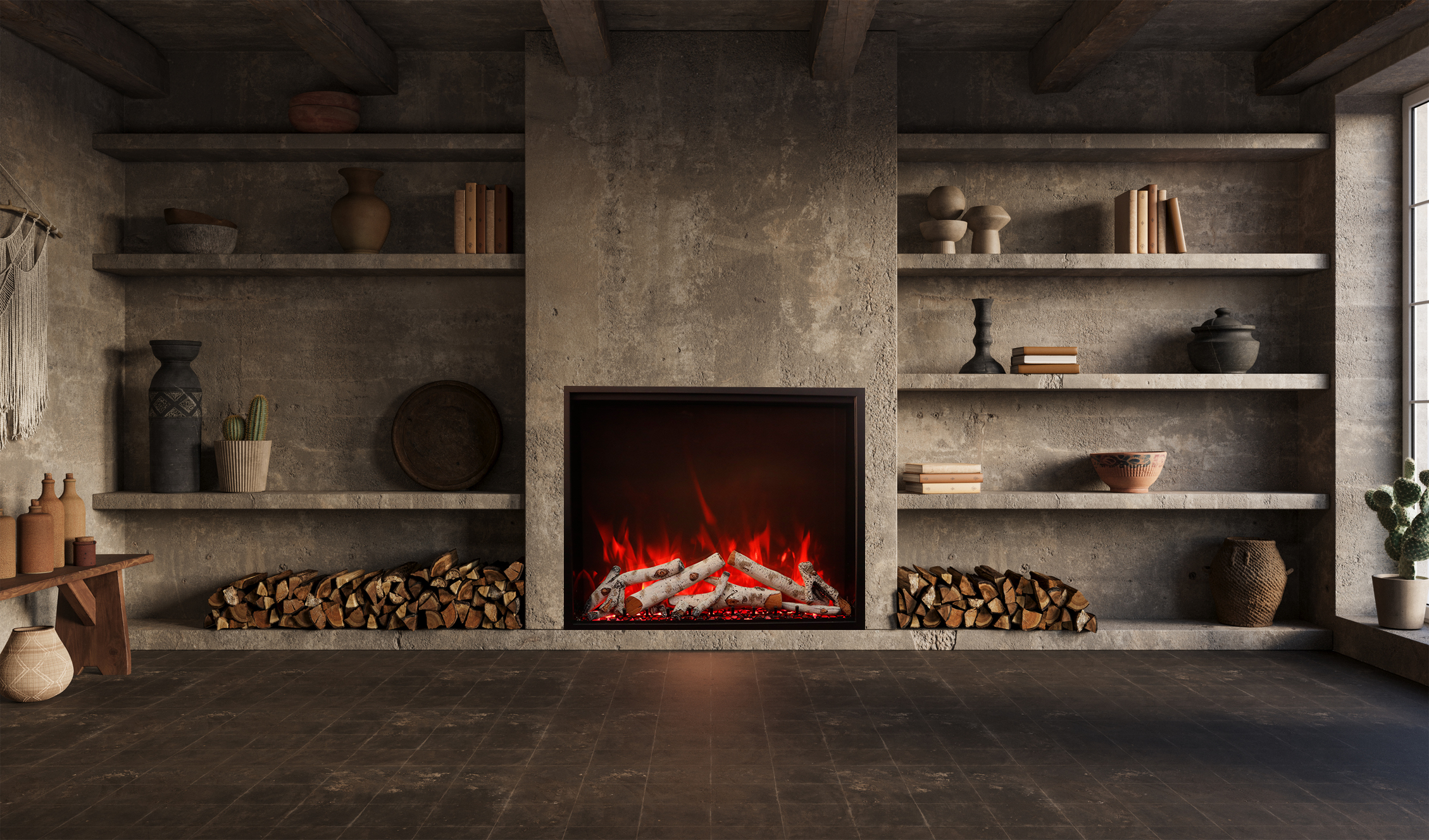
To prepare your fireplace for winter, review its owner's manual, complete the recommended cleaning, arrange any needed inspection or service, and check the controls before seasonal use. Gas, wood-burning, pellet and electric appliances have different requirements, so use the checklist for your fireplace type below.
A fireplace that worked well last winter may still need attention after months of sitting unused. Taking care of maintenance before the first cold evening gives you time to address worn parts, blocked venting or startup problems.
Your Pre-Season Fireplace Checklist
- Find your owner's manual. Confirm the model, fuel type, cleaning instructions and maintenance schedule.
- Review inspection and service needs. Arrange professional attention for fuel-burning appliances and their chimney or venting system as applicable.
- Clean only after the appliance has cooled. Follow the manual's instructions for shutting off fuel or disconnecting electrical power before maintenance.
- Check the surrounding space. Keep furniture, curtains, seasonal decorations and stored firewood outside the manufacturer's required clearances.
- Test smoke and carbon monoxide alarms. Follow the alarm manufacturer's testing and replacement instructions.
- Check controls before cold weather arrives. Review startup instructions and replace control batteries when needed.
Jump to your appliance: Gas fireplaces | Gas logs | Wood fireplaces and stoves | Pellet stoves | Electric fireplaces | Outdoor fireplaces
Schedule Inspection and Service Before Heating Season
Chimneys, fireplaces and vents should be inspected at least annually, with cleaning and repairs completed as needed. For gas and pellet appliances, also follow the manufacturer's service schedule. A qualified professional can check areas that routine surface cleaning will not address.
An inspection may identify damaged seals, deteriorated components or obstructions in the exhaust path. Cleaning frequency depends on the appliance, fuel and use. An annual inspection does not mean every fireplace needs the same cleaning procedure.
If repairs are needed, select only components approved for your appliance. Chimney and venting components must match the fireplace's installation requirements; similar-looking parts are not automatically interchangeable.
Prepare Your Gas Fireplace for Winter
Start with the maintenance instructions for your gas fireplace. Direct-vent and vent-free appliances have different designs, and some tasks belong to a qualified service technician.
- Check glass and visible components. Arrange service for cracked glass, damaged seals or other deterioration.
- Clean glass as directed. Some manufacturers specify fireplace-glass cleaners and particular removal procedures. Use the products and methods listed for your model, and allow the glass to cool completely.
- Review the vent termination. Where it can be viewed safely from the ground, look for obvious debris or damage. Have inaccessible areas and suspected blockages checked professionally.
- Check the controls. Review the wall switch or remote instructions and battery requirements. Replacement fireplace remotes must be compatible with the appliance's control system.
- Follow the lighting instructions. If the pilot was turned off for summer, use the model's prescribed startup procedure. Repeated ignition failures require diagnosis.
Reinstall glass assemblies, safety barriers and other components correctly before operation. Leave gas-pressure checks, valve work and burner servicing to a qualified professional.
Additional Checks for Vent-Free Gas Fireplaces
Vent-free fireplaces do not exhaust through an outdoor vent, so their checklist differs from a direct-vent unit's. Follow the manual's room, combustion-air, operating and cleaning requirements. Keep the burner and pilot areas free of obstructions using only the permitted maintenance methods.
Do not assume visible soot, repeated shutdowns or unusual persistent odors are routine seasonal conditions. Have the appliance checked before continued use.
Prepare Your Gas Log Set
For gas log sets, first identify whether the system is vented or vent-free. Vented sets require a suitable, functioning chimney and the damper opening specified by the installation instructions. Vent-free requirements depend on the listed appliance and its installation.
Check for damaged logs and use the manufacturer's cleaning method. Do not rearrange the logs for appearance: placement affects how the burner operates. If logs must be removed for approved cleaning, return them to the exact arrangement in the manual. A technician should address damaged components or problems with ignition and flame performance.
Check Fire Glass and Other Decorative Media
Fire glass, lava rock and ceramic media can provide different fireplace looks, but decorative fireplace media must be approved for the specific appliance. Follow its instructions for media type, quantity and placement rather than adding material to change the flame.
If the manufacturer permits removing and washing fire glass, let it cool before handling, use the specified cleaning method, and allow it to dry completely before reinstalling it. Inspect media for damage and follow the placement diagram so required burner and pilot areas remain unobstructed. Washing instructions for fire glass should not be applied to ceramic logs or other media.
Prepare Your Wood-Burning Fireplace or Wood Stove
For wood-burning fireplaces and wood stoves, chimney condition and fuel preparation are central to getting ready for winter.
- Have the chimney inspected. Arrange cleaning and repairs as needed before use, including attention to creosote deposits and obstructions.
- Review the firebox and doors. Have damaged components evaluated. Follow the manual's instructions for glass, seals and other serviceable parts.
- Remove ash appropriately. Allow it to cool and follow the appliance's ash-handling instructions. Use a covered metal container kept outside, away from combustible materials, for disposal.
- Prepare dry, seasoned firewood. Store it so it stays dry, and use only fuels permitted by the appliance manufacturer.
- Review the air controls. A stove's air controls and a fireplace's chimney damper are not interchangeable. Follow the instructions for your system.
Clean stove glass only when cool and with an approved method. Appropriate fireplace accessories can help with routine hearth care, but they do not replace chimney inspection or appliance servicing.
Prepare Your Pellet Stove for Winter
Before returning a pellet stove to regular use, review the cleaning schedule for its burn pot, ash collection areas, firebox, glass, hopper, blowers and exhaust system. These components need attention at different intervals, and frequent-use tasks continue throughout heating season.
Complete the permitted cleaning with the stove cool and electrical power disconnected as directed. Ensure burn-pot air openings are maintained according to the manual, and arrange professional attention for deeper service or exhaust-system issues. Use a vacuum only if it is intended for the ash-cleaning task, and follow its instructions.
Inspect accessible door and hopper seals as directed, and check that stored pellets remain suitable for use. If a component needs replacement, match the exact stove model and approved part number. Browse pellet stove replacement parts for compatible options, and ask our team if you need help identifying a part.
Prepare Your Electric Fireplace for Winter
Electric fireplaces do not create a combustion fire or need their own exhaust chimney. Seasonal preparation focuses on cleaning, electrical condition, heater airflow and controls.
- Disconnect power before cleaning. Unplug plug-in models; follow the manual's isolation instructions for hardwired appliances.
- Remove dust as directed. Clean accessible heater openings and exterior surfaces using the manufacturer's approved methods. Do not spray liquid into the appliance.
- Check placement and electrical connections. Maintain the required clearances and follow the model's outlet, circuit and connection instructions. Have damaged wiring or repeated breaker trips assessed professionally.
- Test seasonal functions. Once cleaning is complete and power is restored, check the flame display, controls and heater, if equipped.
Water-vapor models have additional water-system care requirements. Follow their cleaning and water-quality instructions rather than using a checklist intended only for an LED flame display.
Prepare Your Outdoor Fireplace for Cooler Weather
Outdoor fireplace options include different fuels and designs. Apply the relevant gas, wood or electric checks above, then review the appliance's weather-related maintenance requirements.
Look for accumulated leaves, debris and visible weather damage. Follow the manufacturer's instructions for any moisture in the appliance, permitted cleaning and protective covers. Remove covers before operation and keep required ventilation openings clear.
Confirm that furniture, seasonal decorations and nearby materials remain outside the required clearances. An outdoor rating does not authorize enclosing the fireplace or using it indoors. Follow the listed installation and operating conditions, and use the manufacturer's winter shutdown procedure if the appliance will be stored instead of used.
Before the First Fire of the Season
After maintenance is complete, follow the startup instructions with all required components in place. Stay nearby during the initial operation so you can identify a problem before relying on the appliance for warmth.
Stop using the fireplace if it has repeated ignition failures, unexpected shutdowns, damaged glass or smoke entering the room. Arrange qualified service rather than repeatedly restarting it.
If you smell gas or a carbon monoxide alarm sounds, leave the area and seek emergency assistance from a safe location. Do not attempt to troubleshoot the fireplace while remaining in the affected space.
Frequently Asked Questions
When should I prepare my fireplace for winter?
Complete seasonal preparation before the first time you plan to use the fireplace for heat. Allow enough time to schedule an inspection, arrange repairs and obtain any approved replacement parts.
Does an unused fireplace still need to be checked?
Yes. Months of nonuse do not confirm that a fireplace is ready to operate. Review its maintenance requirements and check for deterioration, debris or venting obstructions where applicable.
Can I prepare my fireplace for winter myself?
You can complete homeowner maintenance permitted by the manual, such as certain surface-cleaning tasks or changing control batteries. Gas-system work, electrical repairs, chimney inspection and other technical service require appropriately qualified professionals.
Can I use the same cleaner on every fireplace?
No. Glass, metal finishes, ceramic logs and decorative media can require different cleaning methods. Use products approved for the specific material and appliance, and clean only after the fireplace has cooled.
Do outdoor fireplaces need winter preparation if I will not use them?
Yes. Follow the manufacturer's seasonal shutdown and weather-protection instructions. Those steps may differ from preparation for continued winter use, depending on the fuel, design and installation.
Final Thoughts
Preparing your fireplace for winter starts with understanding the appliance you own. Complete the recommended maintenance, address service needs and check startup instructions before the season's first fire.
Need help finding a compatible accessory, control or replacement part? Contact our Fireplaces Direct product specialists for help with product selection and compatibility. For on-site inspection or repairs, work with a qualified local professional.
Working on fireplace projects for clients? Contractors, builders, designers and other trade professionals can apply for a free SpotixPro account for trade pricing and project support.