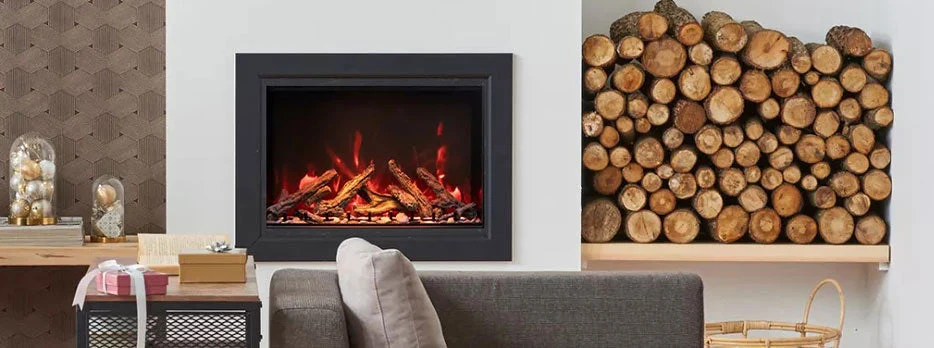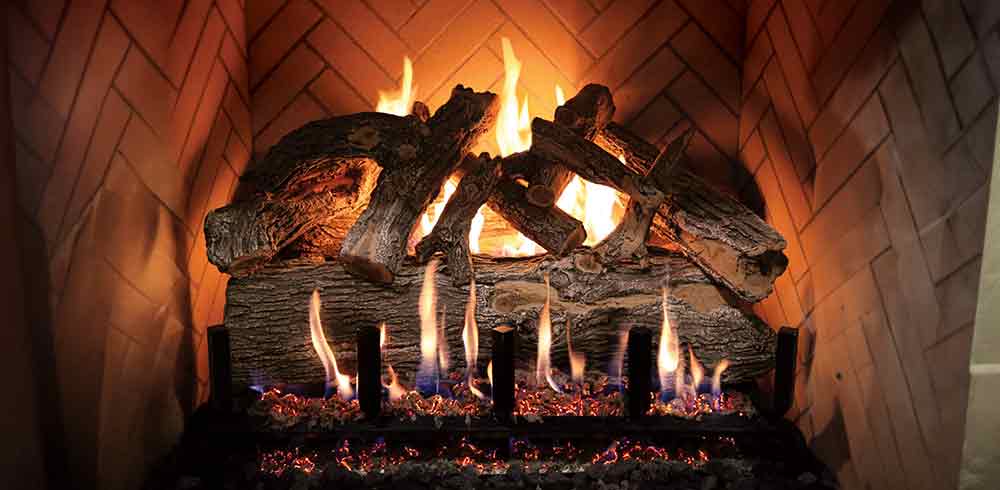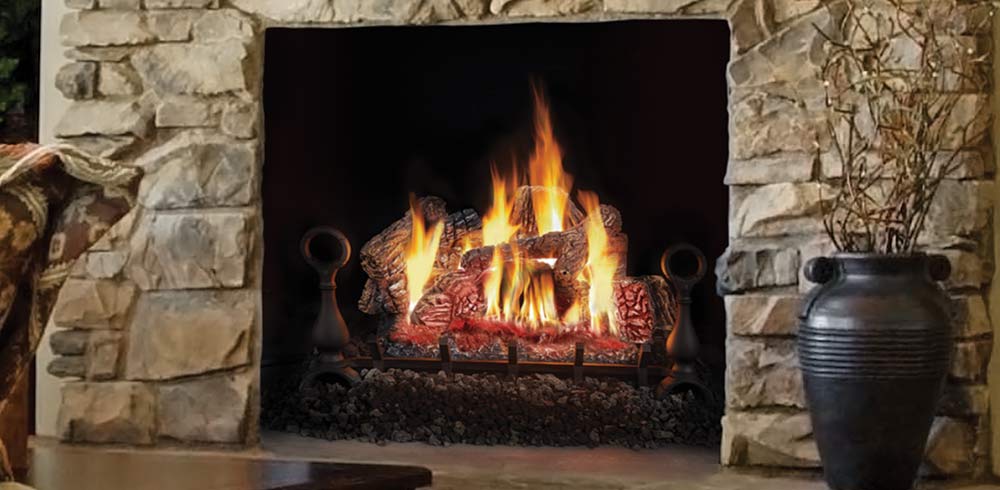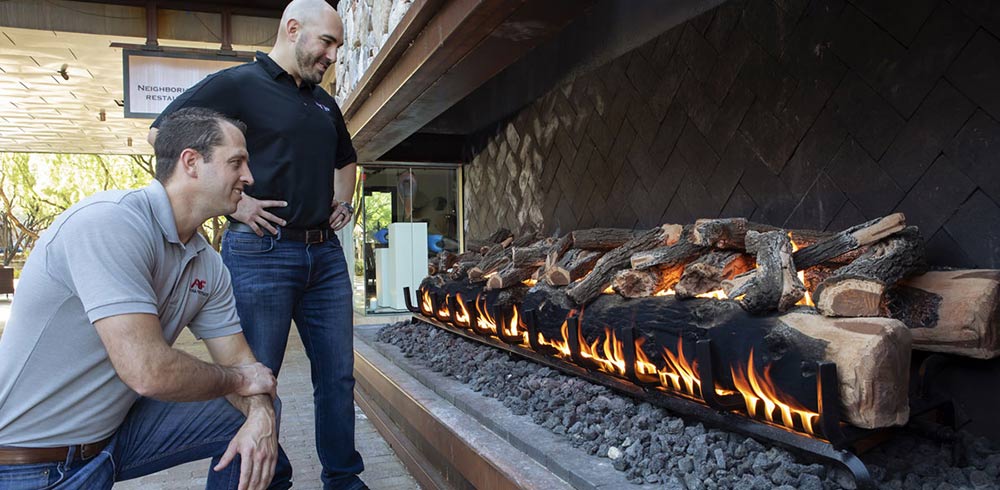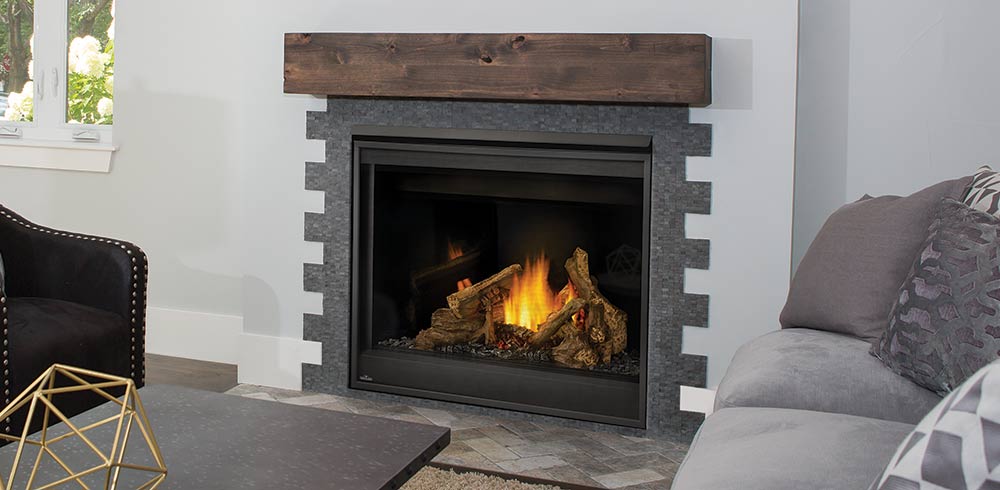
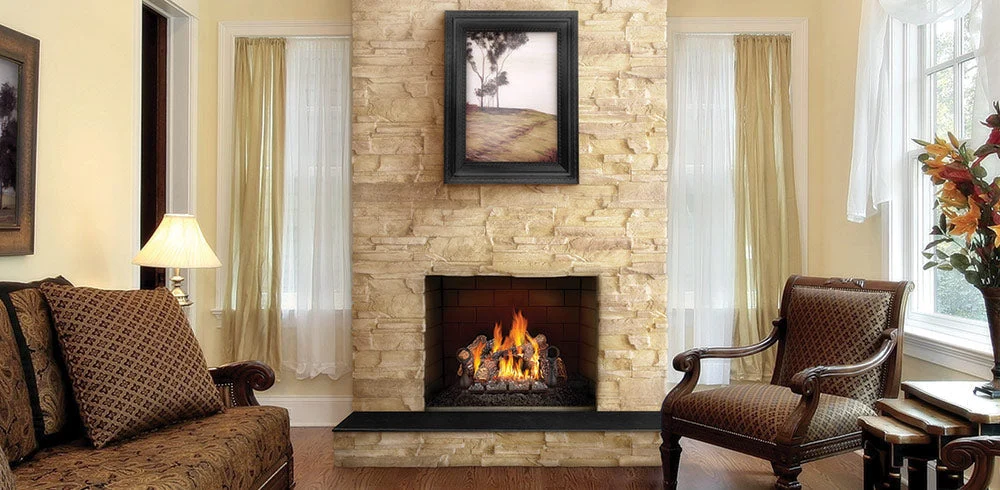
A gas log set adds a burner and decorative logs to an approved firebox. A gas fireplace insert is a self-contained appliance that fits an approved existing fireplace. A built-in gas fireplace is a complete appliance installed within a specified enclosure. The right choice depends on your existing fireplace, heating goals and the scope of your project.
If you want to update an old hearth, both logs and an insert may be worth considering. If you are creating a fireplace where none exists, a built-in fireplace or a compatible listed firebox and log-set combination may suit the project. Start with installation compatibility before choosing a style.
Compare Gas Logs, Inserts and Built-In Gas Fireplaces
| Consideration | Gas log set | Gas fireplace insert | Built-in gas fireplace |
|---|---|---|---|
| What you buy | Logs, burner and controls for an approved firebox | A self-contained appliance for an approved existing fireplace | A complete appliance installed within a specified enclosure |
| Typical project | Convert an approved wood-burning fireplace or equip a compatible listed firebox | Upgrade an existing approved fireplace while retaining much of the hearth | Add a new fireplace location or replace an appliance during a larger remodel |
| Venting | Vented sets need a functioning chimney; vent-free sets have separate installation restrictions | Direct-vent models commonly use approved liners through the existing chimney; other types differ | Direct-vent models use the specified vent system; vent-free models have separate restrictions |
| Heating | Vented logs are generally decorative; approved vent-free sets can provide supplemental heat | Heater-rated models can provide useful room heat; compare the actual rating | Heating capability varies; some models are decorative appliances |
| Appearance | Existing firebox remains visible around the logs | A new firebox and front fit within the existing opening, often finished with a surround | The appliance and surrounding construction establish the finished fireplace design |
| Main fit check | Minimum firebox dimensions for the complete burner and control package | Approved host fireplace, opening dimensions, clearances and vent route | Framing, clearances, finishing requirements and vent route |
Installation type and venting type are different choices. “Insert” describes how an appliance fits into a fireplace. “Direct vent” describes its combustion-air and exhaust system. Do not assume every insert or built-in has identical venting or heating performance.
When a Gas Log Set Makes Sense

A gas log set can preserve the character of an existing hearth while replacing the work of building a wood fire. The surrounding firebox remains part of the appearance, with the logs and burner positioned inside it.
Preserve an Open-Fire Appearance
Log styles range from traditional oak and birch to charred designs. Burner and control choices can add convenient operation without replacing the entire fireplace. Use only the logs, media and accessories approved for the selected burner.
Choose Between Vented and Vent-Free Systems
Vented gas logs require an approved fireplace and functioning chimney. They are generally chosen for flame presentation, with substantial heat escaping through the chimney.
Vent-free gas logs can provide supplemental heat in approved installations, but release combustion byproducts and moisture into the room. Local restrictions, room requirements and the appliance instructions determine suitability. A vent-free set is not a workaround for a damaged or incompatible fireplace.
Potentially Limit Renovation Work
When the fireplace and gas supply are already suitable, a log-set project may require less construction than replacing the fireplace. It still needs qualified installation, correct sizing and any necessary fireplace or chimney preparation.
When a Gas Fireplace Insert Makes Sense

A gas fireplace insert replaces the fire experience within an approved existing fireplace with a self-contained appliance. A surround often covers the gap between the insert and the original opening.
Prioritize Useful Room Heat
If your goal is more than ambiance, compare heater-rated direct-vent inserts. Their closed combustion system draws combustion air from outdoors and exhausts outdoors through the specified venting. Depending on the model, a blower helps circulate warmed room air.
Compare rated heating performance, efficiency information and minimum output as well as maximum input. A model that is too powerful for the space may be uncomfortable even if it physically fits.
Refresh the Hearth While Keeping Its Location
An insert can update the front, interior panels, logs and controls while retaining much of the surrounding hearth. The existing fireplace still limits the available size and shape. Confirm the insert’s complete fit and venting requirements before choosing a surround.
Factory-built fireplaces need particular attention: the proposed installation must be permitted by the applicable listings and manufacturer instructions. An opening that appears large enough is not proof of compatibility.
When a Built-In Gas Fireplace Makes Sense
A built-in gas fireplace is often the starting point for a new fireplace location, new construction or a remodel that includes replacing the existing appliance and enclosure.
Create a New Fireplace Design
Traditional, linear and multi-sided designs offer different possibilities for the room. The appliance determines framing, finishing and clearance requirements, so choose it before finalizing the enclosure or decorative materials.
Style alone does not determine the category. Inserts can look contemporary, and built-in fireplaces can have a traditional log-fire appearance.
Plan the Vent Route Early
A direct-vent gas fireplace may not need a traditional masonry chimney, but it still needs a permitted vent route and termination location. Routing, allowable lengths and clearances depend on the selected appliance.
Not every gas fireplace is a heating appliance. Check whether the model is rated for heating or decorative use before treating it as a room-heating solution.
Which Option Provides Better Heat and Efficiency?
Compare the specific appliance, not just the category name. A vented log set, a vent-free log set and a heater-rated direct-vent insert use fuel differently and deliver different amounts of useful room heat.
- For ambiance: Vented gas logs can provide a real-flame display while preserving the existing firebox.
- For supplemental heat: Compare approved heater-rated inserts and fireplaces. Vent-free options require a separate suitability assessment.
- For comfort: Consider adjustable output, controls and heat distribution, along with insulation and room layout.
Input BTUs describe fuel consumption, not necessarily heat delivered to the room. Neither a glass front nor a high input rating guarantees lower energy bills. Actual operating costs depend on the model, fuel price and how it is used.
Compare Complete Installed Costs
Gas logs can be the less expensive choice when a compatible fireplace, suitable chimney and gas supply are already present. That advantage can change if the hearth needs repairs or substantial gas work.
Ask for a project estimate that includes:
- Appliance and controls: Burner, logs, valve package, required front and any selected remote.
- Gas work: Supply capacity, piping, shutoff provisions and professional commissioning.
- Venting: Chimney inspection or repairs, approved liners or a new vent system, as applicable.
- Construction and finishing: Removal, framing, hearth changes, surround, mantel and finishing materials.
- Electrical work: Power for ignition, lights or blowers where required.
- Local project requirements: Permits and inspections where applicable.
A lower purchase price does not always produce the lowest finished-project cost. Compare quotes for the same scope of work.
What to Check Before You Buy
- Identify the existing fireplace. Record whether it is masonry or factory-built, and locate its model information when available.
- Define your main goal. Decide whether you want open-fire ambiance, useful supplemental heat or a completely new fireplace design.
- Measure the space. Record front width, rear width, depth and height. Note tapering walls, the hearth, mantel and nearby combustible materials.
- Confirm fuel and venting. Match natural gas or propane and have the proposed venting arrangement assessed.
- Compare the complete configuration. Include controls, fronts, surrounds, approved media and required installation components.
- Confirm compatibility with a qualified professional. Complete this check before ordering or modifying the existing fireplace.
For every option, follow the exact appliance instructions for operation, cleaning and service. Direct-vent glass and other surfaces can become very hot. Use the required barriers and clearances, and maintain smoke and carbon monoxide alarms as applicable.
Frequently Asked Questions
Is a gas log set the same as a gas fireplace insert?
No. A gas log set contains a burner, decorative logs and controls that operate within an approved firebox. A gas insert is a self-contained appliance designed to fit an approved existing fireplace. A direct-vent insert also has its own specified combustion-air and exhaust system.
Should I choose gas logs or an insert for an existing fireplace?
Choose based on fireplace compatibility and your goals. Gas logs can preserve an open-fire appearance. A heater-rated direct-vent insert is worth comparing when useful room heat and a closed combustion system are priorities. Neither option is automatically compatible with every existing fireplace.
Can gas logs be installed without an existing fireplace?
They require an approved firebox, not simply an empty wall opening. A new project can use a compatible listed firebox with an approved log set. Vented logs also need a suitable chimney; vent-free installations must meet the appliance instructions and local restrictions.
Do gas fireplace inserts need a chimney liner?
Direct-vent inserts commonly use approved liners routed through an existing chimney for combustion air and exhaust. The exact arrangement depends on the appliance. Vent-free inserts have different requirements, so check the selected model rather than assuming every insert uses the same venting.
Can I replace the logs inside my gas fireplace with another log set?
Only use replacement logs or media specifically approved for that appliance and burner. A complete aftermarket gas log set is not a universal replacement for the components inside a built-in fireplace or insert.
Are gas logs less expensive than a gas fireplace?
They can be when a compatible fireplace, suitable chimney and gas supply are already in place. Compare complete installed project costs, including repairs, gas work, venting, controls, surrounds and finishing. The least expensive appliance is not always the least expensive finished project.
Final Thoughts
Start with the fireplace you have and the result you want. Gas logs can preserve an open-fire appearance, a suitable heater-rated insert can upgrade an existing hearth for useful warmth, and a built-in fireplace can establish a new design or location. Installation compatibility and the appliance’s rating should guide the decision.
Explore gas log sets, gas fireplace inserts and gas fireplaces at Fireplaces Direct. Need help narrowing the options? Contact our product specialists or call 877-374-2070 with your fireplace details and measurements.
Working on a client project? Contractors, builders, designers and other trade professionals can apply for a free SpotixPro account for trade pricing and project support.