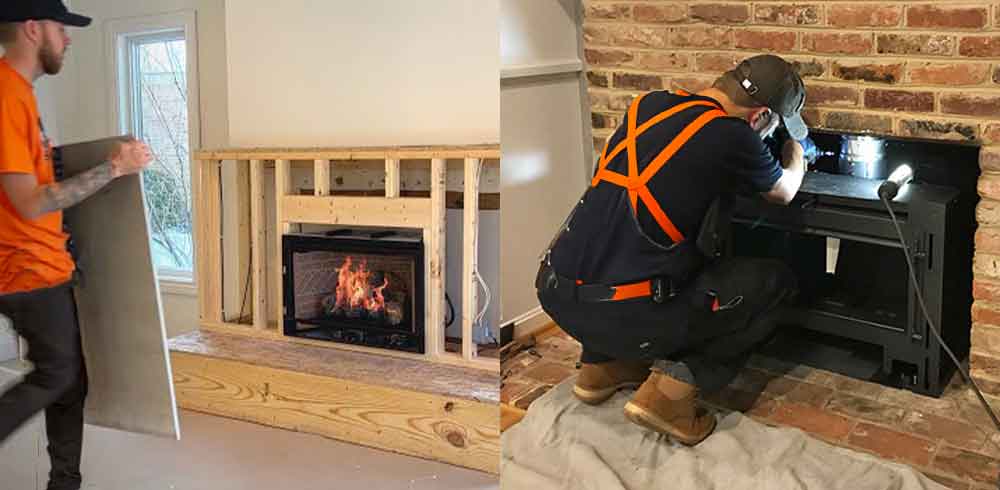

A fireplace insert can update an existing hearth and provide useful room heat, but the right choice starts with compatibility. Confirm that your fireplace can accept an insert, measure the opening, and compare fuel types, heating performance and the complete installation cost. This guide explains how to choose between gas fireplace inserts, electric fireplace inserts and wood-burning fireplace inserts.
What Is a Fireplace Insert?
A fireplace insert is an appliance designed for installation inside an approved existing fireplace opening. It updates the appearance and operation of the hearth without necessarily replacing the entire fireplace structure. Gas and wood inserts produce real flames, while electric inserts create a flame effect and may include a heater.
Inserts are different from complete built-in fireplaces intended for installation in a framed enclosure. Product names can overlap, especially with electric models, so confirm the approved installation method in the specific product manual.
First, Confirm Your Fireplace Can Accept an Insert
A fireplace opening that looks large enough is only the starting point. The existing fireplace’s construction, condition and installation approvals also determine which inserts you can use.
- Masonry fireplaces: Have the firebox, hearth and chimney evaluated before choosing a fuel-burning insert. Repairs or venting work may affect the project.
- Factory-built fireplaces: Identify the manufacturer and model. Compatibility must be established through the applicable appliance listings and installation instructions; do not assume every prefabricated fireplace accepts an insert.
- Existing gas appliances: An insert is not automatically a replacement that slides inside an old gas fireplace. A complete appliance replacement may be required.
- Electric installations: Check the permitted enclosure, clearances and electrical connection. Some models support more than one installation method.
Do not cut, remove or alter fireplace components simply to create space unless the approved installation instructions specifically permit that work. Have a qualified installer confirm compatibility before you order.
Compare Gas, Electric and Wood Fireplace Inserts
| Consideration | Gas Insert | Electric Insert | Wood Insert |
|---|---|---|---|
| Best suited to | Real flames with convenient controls | Flame effects with minimal routine cleaning | Homeowners who want to burn firewood |
| Fuel or power | Approved natural gas or propane configuration; electrical needs vary | An electrical supply matching the model’s requirements | Suitable dry firewood; electricity for a blower if equipped |
| Venting | Direct-vent models require an approved vent system; vent-free models have different installation restrictions | No combustion venting | An approved chimney connection and liner system |
| Routine ownership | Appliance cleaning and professional service as specified | Dust removal and care of accessible components as specified | Wood handling, ash removal and chimney inspection and cleaning |
Choose Gas for Real Flames and Convenient Operation
A gas insert is worth considering if you want real flames without storing wood or removing ash. Compare ignition systems, flame adjustment, thermostat options and the control features included with each model. Choose the correct natural gas or propane configuration for your home.
Direct-vent and vent-free inserts have different requirements. If you are considering a vent-free gas insert, confirm that it is permitted at your location and suitable for the intended room before purchasing.
Choose Electric for Flame Effects and Low Routine Upkeep
An electric insert can refresh an unused fireplace without adding a gas line or combustion venting. Compare the flame appearance, viewing area, sound level and heater controls. Many models offer flame effects with the heat turned off.
Check the actual electrical requirements. Some inserts plug into an appropriate outlet, while others require hardwiring. Heating performance varies by model and installation; avoid choosing solely from an advertised room-size estimate.
Choose Wood If You Want to Keep Burning Firewood

A wood insert can deliver more useful room heat than an open wood-burning fireplace while preserving the experience of a real wood fire. Compare the manufacturer’s heat output, efficiency information, firebox capacity and operating requirements. Review emissions certification separately from efficiency ratings.
Plan for dry firewood storage, loading, ash removal and chimney care. An insert improves how effectively heat is used; it does not change the energy contained in the firewood.
How to Measure for a Fireplace Insert
Record the dimensions below and compare them with the model’s minimum fireplace dimensions and installation drawings. A tapered or irregular firebox can limit your options even when the front opening appears generous.
- Front width: Measure the usable opening across the front.
- Rear width: Measure the back of the firebox and note any taper.
- Height: Check the usable height and any sloping surfaces or obstructions.
- Depth: Measure the available space from the opening to the rear wall.
- Hearth and surrounding surfaces: Record the hearth dimensions, mantel location and nearby trim.
- Face coverage: Measure the area a surround needs to cover around the opening.
Take clear photos and locate the existing fireplace’s identification label if available. The installer should also evaluate the vent route, connection access and required clearances. A decorative surround covering the opening does not prove the insert fits correctly.
Match Heating Performance to Your Goals
Decide whether your priority is ambiance, occasional supplemental heat or regular heating in the room. Floor area matters, but ceiling height, insulation, climate and the layout between rooms also influence comfort.
Compare the model’s stated heat output and efficiency using equivalent rating methods where available. For gas models, fuel input and delivered heat are different measurements. Adjustable output can help prevent a smaller room from becoming too warm. For wood models, firebox capacity alone does not establish how well the insert suits your space.
Do not assume an insert will heat the entire home. Explain your goals to your installer and the Fireplaces Direct team so you can compare realistic options.
Plan Venting, Fuel and Electrical Connections
Gas Insert Requirements
A direct-vent gas insert needs the venting configuration approved for that model, commonly routed through the existing chimney. Your installer should confirm liner requirements, termination, chimney condition, gas supply and any electrical connection. Browse gas fireplace venting after the required system has been identified.
Vent-free inserts do not use the same exhaust arrangement, but they still have room, air-supply and installation requirements. Absence of a flue connection does not make every room or existing fireplace suitable.
Wood Insert Requirements
A wood insert needs a chimney and liner arrangement that meets its installation requirements. Have the chimney evaluated before budgeting. The required liner size, length, insulation and connection details depend on the appliance and installation. Choose components from chimneys and venting based on that confirmed specification.
Electric Insert Requirements
Confirm voltage, circuit requirements, outlet location or hardwiring instructions, and access for service. Keep the appliance’s air openings clear and follow its installation instructions for cable routing and clearances. Electrical work may require a qualified electrician.
Compare Features and Included Components
- Viewing area: Compare the visible flame opening rather than relying on the overall product width.
- Controls: Check which remote, thermostat or app features are included and which require accessories.
- Blower: Confirm whether one is included, optional or unavailable. Choose only a blower kit approved for the model.
- Front and surround: Check required components, available finishes and coverage dimensions. Decorative trim and protective safety barriers serve different purposes.
- Heat and flame adjustment: Compare the available settings and whether they operate independently.
- Service access: Ask how routine maintenance and future component replacement will be handled.
Accessories are model-specific. Check compatibility before choosing fireplace remotes or replacement components.
How Much Does a Fireplace Insert Cost?
Compare the complete installed project, rather than the appliance price alone. Your budget may need to include:
- The insert and any required front, surround or safety barrier.
- Chimney inspection, cleaning and repairs.
- Approved liners, venting components and termination parts.
- Gas supply or electrical work.
- Hearth or finishing work permitted by the installation instructions.
- Labor, permits and any required inspections.
An electric installation may avoid gas and venting work, but electrical or finishing changes can still affect the total. Gas and wood projects depend heavily on the existing fireplace and chimney. Request an itemized installation estimate before ordering.
For ongoing costs, consider local fuel or electricity prices, how often you will use the insert and its maintenance needs. A higher purchase price alone does not guarantee lower operating costs.
Understand the Maintenance Commitment
Gas: Plan for inspection, cleaning and service at the intervals specified by the manufacturer. Glass, burner components, venting and controls may require different care. Leave gas-system work and technical adjustments to a qualified professional.
Electric: Follow the instructions for cleaning accessible surfaces and keeping air openings free of dust. Disconnect power as directed before maintenance. Internal repairs require the appropriate service procedures.
Wood: Plan for regular ash removal, appropriate fuel storage, and chimney inspection and sweeping. Burn only the fuel specified by the manufacturer. Do not burn trash, treated lumber or painted wood. Choose suitable tools from fireplace accessories.
Service life depends on the model, use and maintenance. Before buying, review the warranty, service requirements and availability of compatible replacement parts.
Your Before-Ordering Checklist
- Identify the existing fireplace and confirm insert compatibility.
- Compare all firebox measurements with the selected model’s requirements.
- Confirm hearth protection, mantel and trim clearances.
- Choose the correct fuel configuration or electrical connection.
- Have the required venting system and site work specified.
- Check required fronts, surrounds, controls and other components.
- Review the itemized installation estimate and maintenance requirements.
- Have a qualified installer confirm the final plan.
Frequently Asked Questions
Is an insert’s advertised size the same as the fireplace opening it needs?
No. A model’s advertised size may describe its viewing area, face or product series. Compare your measurements with the minimum fireplace dimensions and installation drawings in that specific insert’s manual.
Can a surround make an insert fit an incompatible fireplace?
No. A surround covers the visible gap around an approved installation. It does not increase firebox space, change clearance requirements or make an incompatible fireplace suitable for an insert.
Can I buy a natural gas insert and switch it to propane later?
Only if the manufacturer permits conversion for that exact model. Some inserts require a specific fuel configuration or an approved conversion kit installed by a qualified professional. Confirm your fuel supply before ordering.
Can an electric fireplace insert show flames without producing heat?
Many electric inserts let you operate the flame effect independently of the heater. Confirm that feature on the model you are considering, especially if you want ambiance during warmer weather.
Will a fireplace insert work during a power outage?
Operation depends on the appliance. Electric inserts require electricity. Some gas inserts have approved battery backup or ignition systems that support operation without household power. Wood inserts may continue heating, but blower operation and any restrictions on use without power depend on the model. Check the manual before relying on an insert for backup heat.
Do I need to buy a blower separately?
Check the model’s included components. A blower may be included, offered as a compatible accessory or unavailable. It circulates room air around the appliance to distribute heat; it does not replace the required combustion venting.
What should I send Fireplaces Direct when asking for help choosing an insert?
Send your fireplace measurements, clear photos of the opening and hearth, the existing fireplace’s manufacturer and model if available, your preferred fuel type and your heating goals. A qualified installer should confirm site conditions, compatibility and the final installation requirements.
Final Thoughts
The right fireplace insert fits your existing fireplace, supports your heating goals and suits the way you want to use your hearth. Start with compatibility and measurements, then compare fuel type, required installation work and everyday upkeep.
Explore gas fireplace inserts, electric fireplace inserts and wood-burning fireplace inserts at Fireplaces Direct. Need help comparing models or required components? Call 877-374-2070 or contact our product specialists with your measurements and project details.
Shopping for a client or project? Contractors, builders, designers and other trade professionals can apply for a free SpotixPro account for trade pricing and project support.