
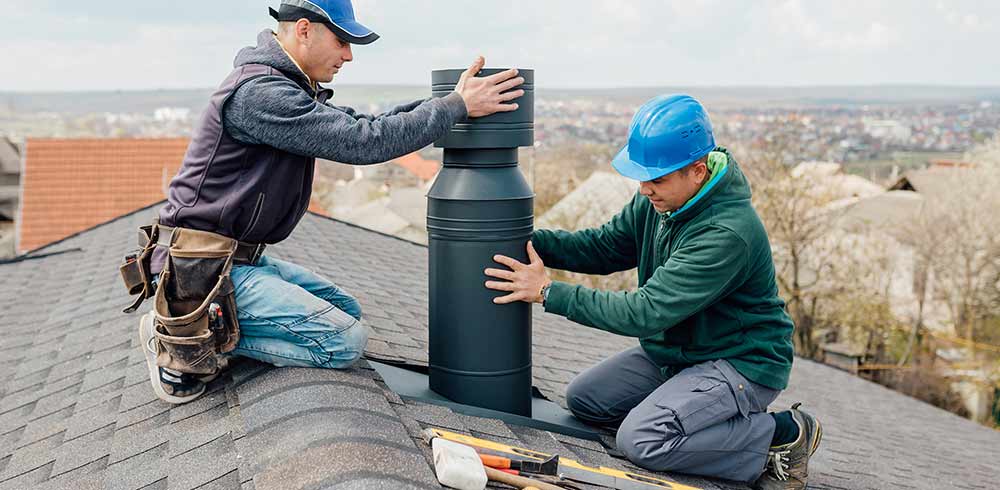
Choosing chimney or venting pipe starts with your fireplace or stove's installation manual. The correct system depends on the appliance, fuel, approved pipe series and installation layout. Matching the diameter alone is not enough.
This guide explains the main types of chimney and venting components, what each system does and which details to gather before ordering. Use it to understand your options, then have your proposed layout checked against the appliance instructions, venting instructions and local requirements.
What Type of Chimney or Venting Do You Need?
Different pipe systems serve different appliances. Wood chimney, stove connector, direct vent, B-vent and pellet vent components are not interchangeable.
- Factory-built wood fireplaces: Use the chimney system specifically approved for the fireplace.
- Freestanding wood stoves: Commonly use an interior stove connector joined to an approved chimney system.
- Direct vent gas fireplaces and stoves: Use an approved system that provides combustion air and carries exhaust outdoors.
- B-vent gas appliances: Use Type B gas vent where the appliance instructions specify it.
- Pellet appliances: Use venting approved for the appliance and its permitted fuel.
- Fireplace inserts: May require a chimney liner or paired intake and exhaust liners, depending on the appliance.
An existing chimney does not automatically meet a new appliance's requirements. Its condition, dimensions and compatibility need to be evaluated before reuse.
Wood Fireplace Chimney Systems and Class A Pipe
Factory-built wood fireplaces and wood stoves require chimney systems designed for their operating conditions. These systems may use insulated or air-cooled construction, depending on the approved product.
Factory-Built Wood Fireplace Chimneys
A factory-built wood fireplace may require a particular chimney series, diameter, support system and termination. Do not assume any pipe labeled “Class A,” “double-wall” or “triple-wall” can be connected to it.
Check the fireplace manual's approved component list before shopping for wood chimney systems. This is especially important when replacing an appliance while hoping to retain its existing chimney.
Class A Chimney Pipe
Class A chimney pipe is commonly used with approved solid-fuel appliances, including many wood stove installations. The required listing, diameter and compatible components depend on the appliance and chimney system.
Wall count alone does not establish suitability. Two double-wall products can have different construction, connection methods and clearance requirements.
Never assume a universal clearance to combustible materials. Use the specified airspace for your exact system, and do not fill required clearance spaces with insulation unless the instructions explicitly permit it.
Stove Pipe: The Interior Connector
Stove pipe connects a wood stove to its chimney system within the room containing the stove. It is different from the chimney that continues through the building and outdoors.
Stove connectors are available in single-wall and double-wall designs. A double-wall connector is still not the same product as double-wall chimney pipe.
Interior stove connector pipe must not be routed through walls, ceilings, attics or concealed spaces. The transition to the chimney requires the appropriate listed components for the layout, which may include a support box, adapter or wall-pass-through assembly.
A wall thimble alone does not make an otherwise unsuitable pipe safe to pass through a wall. Plan the complete transition using the chimney manufacturer's instructions.
Direct Vent Gas Fireplace Pipe
Direct vent systems bring outdoor air to the combustion chamber and carry exhaust outdoors. The appliance manual identifies approved venting systems and permitted routes.
Explore gas fireplace venting after confirming your appliance model and required pipe series.
Coaxial Direct Vent
Coaxial venting uses a pipe-within-a-pipe arrangement. Exhaust travels through the inner passage, while combustion air travels through the surrounding passage.
Some appliances permit horizontal termination, vertical termination or both. Allowable rise, horizontal run, elbows and termination locations must be checked against the appliance's venting diagrams.
Colinear Direct Vent
Colinear systems use separate intake and exhaust pipes. They are commonly associated with approved gas insert installations in existing masonry chimneys.
Use only the liner materials, adapters and termination configuration permitted for the appliance. Coaxial and colinear arrangements are not interchangeable without an explicitly approved configuration.
Power Venting
Some gas appliances offer approved power-vent configurations for particular layouts. Do not add a fan to compensate for a route outside the appliance's permitted venting limits. A power vent must be specifically approved and installed as part of the complete system.
Type B Gas Vent
Type B gas vent is a double-wall system used with gas appliances whose instructions permit it. Unlike direct vent, it does not provide a dedicated outdoor combustion-air passage through the vent assembly.
B-vent is not a substitute for wood chimney, pellet vent or direct vent pipe. Its selection is based on appliance approval and installation requirements, rather than an assumption that one pipe type offers better efficiency than another.
Pellet Vent Pipe
Pellet appliances require venting approved for the appliance and fuel being burned. Pellet vent is a separate category from B-vent gas pipe, even when components look similar.
Diameter, clearances, joint sealing, cleanout access and termination requirements vary by system and layout. Do not assume every pellet installation uses the same pipe size or can terminate in the same location.
Follow the appliance's sizing instructions, including any requirements related to vertical rise, horizontal sections, elbows or elevation.
Chimney Liners for Existing Masonry Chimneys
A chimney liner provides a defined exhaust pathway inside an existing chimney. The correct liner depends on the connected appliance, fuel, chimney condition and applicable installation requirements.
A wood insert installation may require a stainless steel liner, while a direct vent gas insert may use separate approved intake and exhaust liners. These are different applications, and their materials should not be substituted based on appearance.
Have the existing chimney inspected before planning a retrofit. A liner does not automatically resolve structural damage or make every chimney suitable for a new appliance. Confirm any insulation, sizing and connection requirements with the selected system's instructions.
Plan the Complete System, Not Just the Pipe
Straight sections are only part of a chimney or venting purchase. Your route determines the required connections, supports, protective components and termination.
Adapters, Elbows and Fittings
Chimney pipe fittings can include adapters, elbows, tees and other connections. Each must be approved for the specific system.
Elbows and offsets can affect permitted routing and support requirements. Do not assume that adding another elbow is acceptable because the pieces physically connect.
Supports, Firestops and Insulation Shields
These components perform different jobs. Supports carry the system's weight, while specified firestops and shields help maintain the required installation conditions at floors, ceilings and insulated spaces.
Use the components required for each location. Decorative trim does not replace a structural support, firestop or insulation shield.
Roof Flashing
Chimney flashing helps direct water away from a roof penetration. Choose a product suited to the pipe system, outside dimensions, roof pitch and roofing material.
Follow the flashing and roofing instructions for integration and sealing. There is no single sealant specification that applies to every chimney or vent product.
Storm Collars
A chimney storm collar helps shed water at the pipe above the flashing where specified. It complements the flashing rather than replacing it.
Confirm the correct fit and follow the system's instructions for positioning and sealing the collar.
Termination Caps
The termination is part of the approved system. Choose the specified cap or terminal rather than selecting solely by diameter, appearance or advertised wind protection.
Its location must meet the appliance and venting instructions, including relevant distances from roofs, openings, adjacent surfaces and other obstructions. A different cap is not a guaranteed fix for a draft problem.
Match the Brand and the Exact Product Series
Fireplaces Direct carries chimney and venting products associated with brands including Majestic, DuraVent, Superior, Napoleon, Kingsman, Sierra Flame and White Mountain Hearth. The appliance brand and venting manufacturer may differ when that combination is explicitly approved.
The exact product series matters as much as the brand. Components from two series made by the same manufacturer should not be assumed interchangeable.
Use the approved components and transitions documented for your installation. Do not force connections or improvise adapters. If an existing series is discontinued, have the system identified and check for documented replacement options before deciding whether part or all of it must be replaced.
What to Gather Before Ordering
Bring the following information to your installer or our product specialists:
- Appliance identification: Brand, exact model number, fuel type and installation manual.
- Existing system details: Pipe labels, series names and part numbers, plus clear photographs.
- A proposed route: Vertical and horizontal sections, elbows, offsets and wall or roof penetrations.
- Building details: Ceiling heights, roof pitch, chase dimensions and nearby obstructions.
- Termination location: The planned exit point and surrounding windows, doors, roof surfaces or air intakes.
- Project scope: A new installation, appliance replacement, chimney retrofit or individual component repair.
Have a qualified installer confirm the final layout and component list before purchasing. This helps identify missing supports, incompatible connections or routing limits before work begins.
Frequently Asked Questions
Can I identify chimney pipe by measuring its diameter?
Diameter is only one part of identification. You also need the manufacturer, product series and applicable part numbers. Similar-sized pipes can have different connections, clearances and approved uses.
Can I reuse existing venting when replacing a fireplace?
Possibly, but only after confirming that the new appliance permits the existing system and that the components and layout remain suitable. Matching fuel type or pipe diameter alone is not enough.
Does double-wall stove pipe count as Class A chimney?
No. Double-wall stove connector and Class A chimney are different products. A connector joins the stove to the chimney within the room, while the approved chimney system continues through the building and outdoors.
Can I mix chimney or venting brands?
Use only combinations and transitions explicitly permitted by the appliance and venting manufacturers. A physical connection does not establish approval, and components from different series within one brand may also be incompatible.
Does every chimney pipe need the same clearance?
No. Required clearances vary by product and installation location. Follow the instructions for the exact appliance, pipe series and components rather than applying a general clearance measurement.
Final Thoughts
The right chimney or venting purchase starts with the appliance manual and ends with a complete, compatible component list. Confirm the exact system, approved route, clearances, supports and termination before ordering individual pieces.
Shop chimney and venting components at Fireplaces Direct or contact our product specialists with your appliance model and installation details. Our team can help identify product options for your installer to review.