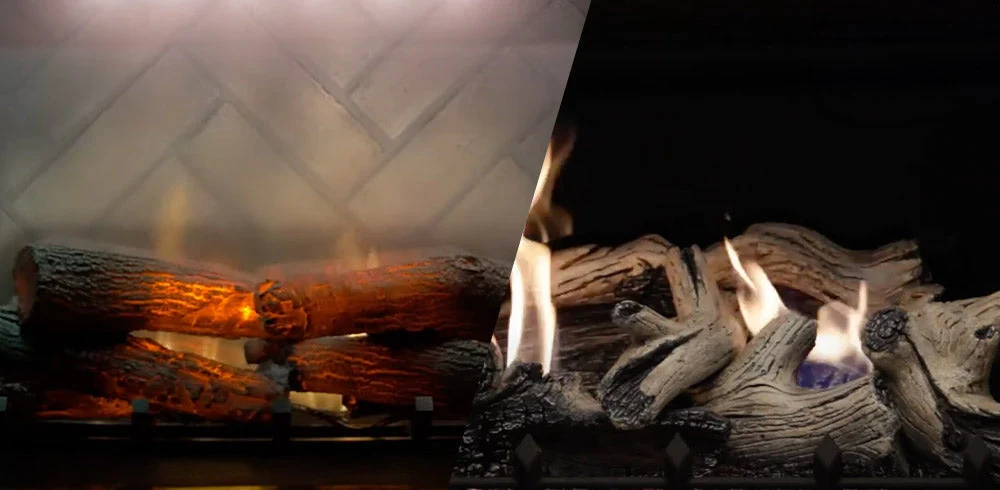
Choose gas logs if real flames are your priority and your fireplace supports an approved gas installation. Choose electric logs if you prefer simulated flames, simpler setup when suitable power is already available, and the option of ambiance without heat. For heating, distinguish vented gas logs from vent-free sets before comparing either with electric logs.
Both can update an existing hearth without hauling firewood. The right choice depends on your fireplace, fuel or electrical supply, desired heat, installation budget and maintenance preferences.
Gas Logs vs. Electric Logs at a Glance
Gas logs fall into two categories with different installation requirements and heating characteristics. This comparison separates them so you can make a more useful decision.
| Consideration | Vented gas logs | Vent-free gas logs | Electric logs |
|---|---|---|---|
| Flame appearance | Real gas flames; often chosen for a traditional flame display | Real gas flames with a prescribed log arrangement | Simulated flames and illuminated logs or embers |
| Venting | Approved fireplace and functioning chimney required | No dedicated exhaust vent in an approved installation; local restrictions apply | No combustion exhaust vent required |
| Heating role | Generally decorative; substantial heat escapes through the chimney | Supplemental heating where approved; room and operating restrictions apply | Supplemental heat on models with a heater |
| Installation | Gas supply, fireplace/chimney assessment and professional installation | Gas supply, approved firebox, room assessment and professional installation | Approved location and suitable electrical supply; additional work may be needed |
| Ambiance without heat | No; burning gas produces heat | No; burning gas produces heat | Available on models with independent flame and heater controls |
| Maintenance | Burner, logs, controls and chimney need attention | Burner, pilot/ODS, logs and controls need attention | Dusting, clear air openings and electrical/cord checks |
| Power outages | Some ignition packages work without household power | Some ignition packages work without household power | Needs electrical power |
How Gas and Electric Fireplace Logs Work
Gas Logs: Real Flames With Natural Gas or Propane
Gas log sets pair decorative logs with a compatible burner and control system. The selected appliance must match your fuel supply, fireplace and installation requirements.
Vented gas logs exhaust combustion byproducts through a functioning chimney. Vent-free gas logs operate without a dedicated exhaust vent in approved installations, releasing combustion byproducts and moisture into the room. Their suitability depends on local restrictions and the specific appliance’s requirements.
Electric Logs: Flame Effects With Optional Supplemental Heat
Electric logs use lighting and display effects to create the appearance of fire. Many include an electric heater, and supported models can run the flame effect independently of heat.
They need no gas supply or combustion venting. However, they still need a suitable installation space, airflow and electrical supply. Browse electric log products and accessories carefully, since replacement log kits are not necessarily complete powered appliances.
Which Looks More Realistic?
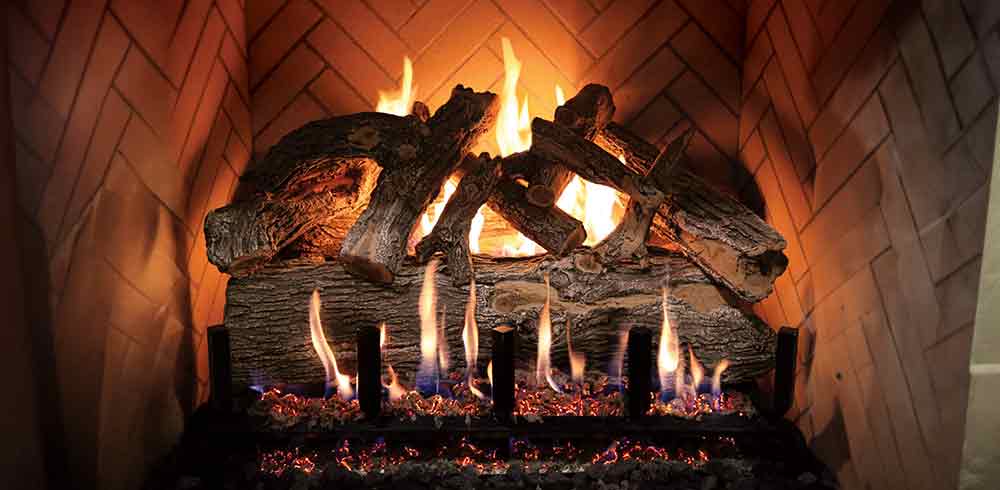
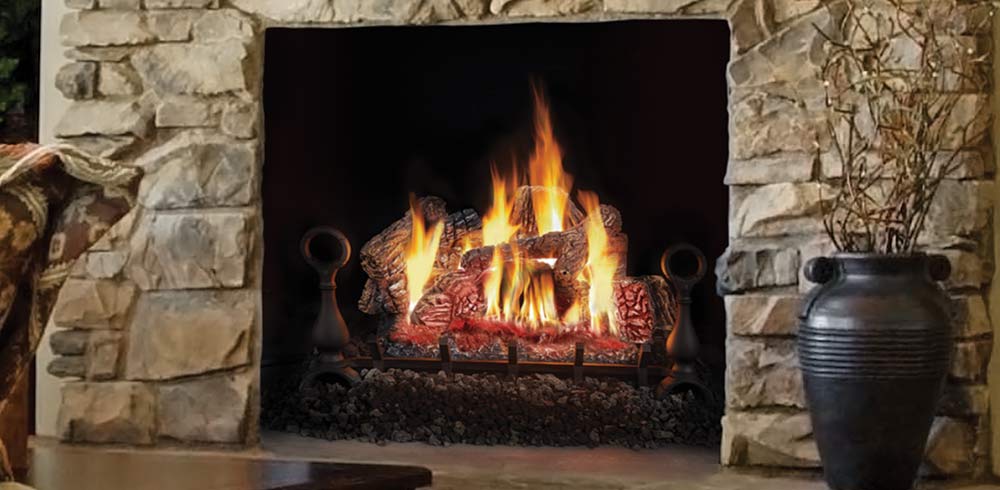
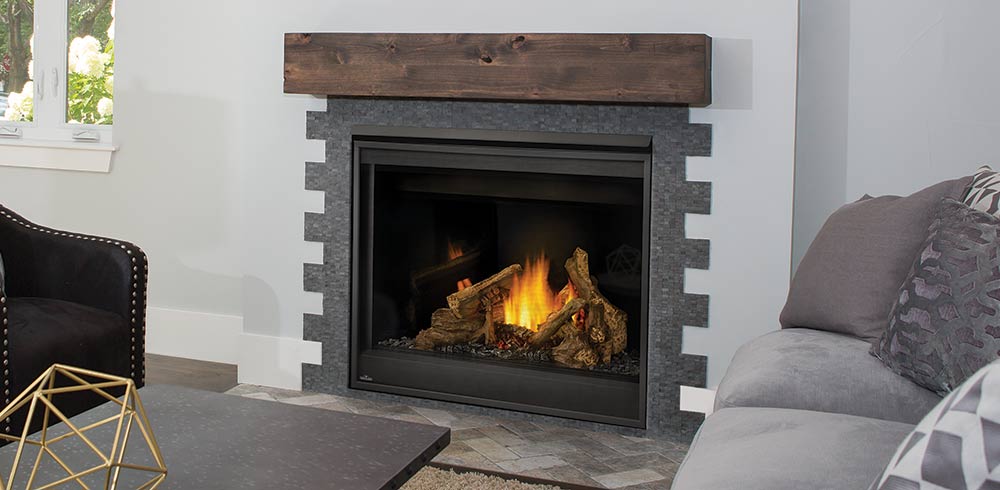
Gas provides an actual flame, making it a natural choice when that experience matters most. Log shape, burner design and ember details influence the overall appearance. Vented and vent-free systems also have different flame presentations.
Electric sets create an illusion rather than combustion. Their appeal depends on the display technology, viewing angle, room lighting and existing firebox. Look at product videos for the exact model and consider how the logs appear when switched off as well as on.
If you want the flame effect on a warm evening, an electric set with independent controls has an advantage: you can leave the heater off. A burning gas flame always generates heat.
Which Provides More Useful Heat?
A higher gas input rating does not automatically mean more heat reaches your room. Input BTUs describe fuel consumption. They are not interchangeable with useful heating output.
- Vented gas logs: Generally selected for ambiance. They provide radiant warmth, but substantial heat escapes through the open chimney.
- Vent-free gas logs: Retain more heat in the room, but are subject to location, room-size and operating requirements. Confirm they are permitted and appropriate before considering them for supplemental heating.
- Electric logs: Models with heaters provide supplemental warmth. Actual comfort depends on insulation, ceiling height, layout and climate.
If dependable room heating is the main goal, also compare purpose-built gas fireplace inserts that are approved for your fireplace. A decorative gas log set should not be assumed to replace a heating appliance.
Installation: What Does Your Fireplace Need?
For Gas Logs
Have a qualified professional confirm fireplace compatibility, gas type, supply capacity, clearances and the correct burner/control package. Vented sets need a suitable chimney and the damper arrangement specified by the manufacturer. Vent-free sets require an approved firebox and an assessment of the room and installation restrictions.
Measure front width, rear width, depth and height. Compare all four with the complete system’s minimum firebox dimensions, including space for valves and controls. Do not choose by nominal log length alone.
For Electric Logs
A plug-in set can involve less work when an appropriate outlet and approved installation space already exist. Check the full appliance dimensions, including its flame panel, and the model’s electrical requirements. Have an electrician handle outlet or circuit changes.
For the featured Revillusion, plug directly into a suitable grounded wall outlet. Do not use an extension cord or power strip. Keep airflow clear and route the cord as instructed.
If replacing gas logs, have a qualified professional disconnect and secure the gas supply. An electric appliance needs no combustion vent, but changes to an existing chimney should account for moisture, debris, drafts and future fireplace use.
Purchase Price, Installation and Running Costs
Compare complete project costs rather than appliance prices alone. Gas projects may add a gas line, valve and remote package, professional installation, chimney preparation or repairs. Electric projects may add an outlet, circuit work, fireplace preparation or gas disconnection.
For operating costs, use your actual utility rate and the selected appliance’s specifications:
- Electricity: Kilowatts used × operating hours × your price per kWh. Convert watts to kilowatts by dividing by 1,000.
- Natural gas: Input BTU per hour ÷ 100,000 × hours × your price per therm. This estimates burner fuel cost when gas is billed in therms.
- Propane: Use the appliance’s rated fuel consumption and your delivered propane price.
For illustration, a 1,500-watt heater running continuously for one hour at $0.16 per kWh costs about $0.24. A 50,000-BTU-per-hour burner running for one hour at $1.50 per therm uses about $0.75 of natural gas. These hypothetical rates compare fuel use, not equivalent room heating. Add standing-pilot use where applicable; thermostat cycling and settings affect actual consumption.
Neither option automatically lowers your heating bill. Results depend on local energy prices, useful heat delivered and whether you reduce demand on another heating system.
Safety and Maintenance Differences
Gas logs: Real flames and hot surfaces require appropriate protection and clearances. Follow the exact log-placement instructions and use only approved media. Arrange inspection and maintenance on the manufacturer’s schedule, including chimney attention for vented installations. An oxygen depletion sensor on a vent-free appliance is not a carbon monoxide detector.
Electric logs: No fuel is burned, so the appliance produces no combustion exhaust. The heater can still become hot, and blocked air openings, damaged cords or unsuitable wiring create hazards. Keep children and pets away from hot areas and follow the manual’s precautions.
Electric sets generally have fewer routine maintenance tasks, but still need dust removal, clear ventilation openings and checks for damage. Disconnect power and let the appliance cool before cleaning. Neither type should be treated as maintenance-free.
Two Examples to Explore
Gas Example: Real Fyre White Birch Vented Gas Log Set

The White Birch offers refractory ceramic logs with a distinctive birch appearance and a real gas flame. It is a vented option for an approved fireplace, with different burner and ignition configurations to compare.
Consider it when flame appearance is your priority and your fireplace supports the required vented installation. Confirm the complete package’s size, fuel and controls.
Shop Real Fyre White Birch Vented Gas Logs
Electric Example: Dimplex Revillusion Plug-In Electric Log Set
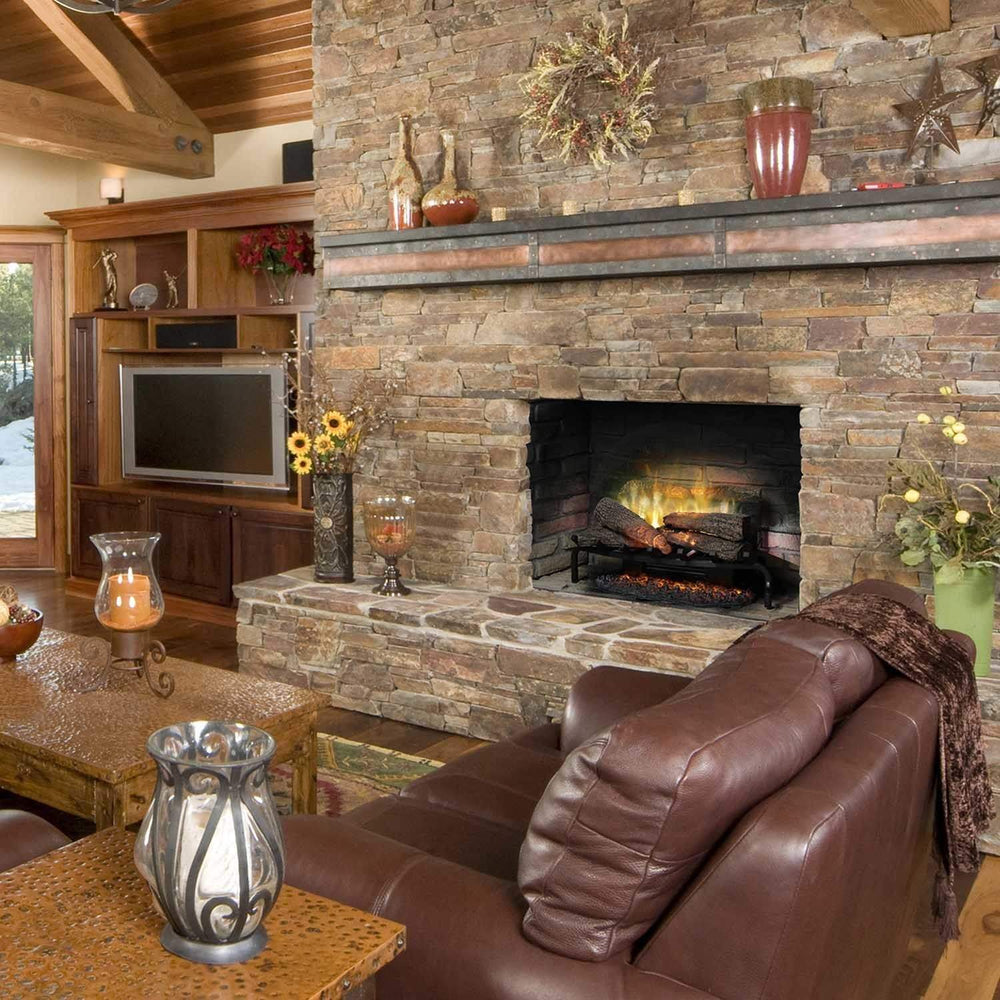
Revillusion combines illuminated Realogs with a Mirage flame panel and ThruView design. Its included remote operates the flame effect and heater independently.
Consider it when you want a simulated fire with optional supplemental heat and no gas connection. Confirm the selected model’s complete installation dimensions and electrical requirements.
Shop Dimplex Revillusion Electric Logs
Which Log Set Is Right for You?
- Choose vented gas logs when real-flame ambiance matters most and an approved fireplace with a suitable chimney is available.
- Consider vent-free gas logs when supplemental heat is important and the appliance is permitted and appropriate for your room.
- Choose electric logs when you prefer simulated flames, supported flame-only operation and a setup that uses an appropriate electrical supply.
- Compare other fireplace types if neither option fits your heating goals, fireplace conditions or desired appearance.
Frequently Asked Questions
Are gas logs or electric logs better for heat?
It depends on the gas appliance. Vented gas logs are generally decorative and lose substantial heat through the chimney. Approved vent-free sets retain more heat in the room but have installation and use restrictions. Electric log heaters provide supplemental warmth. Compare useful heat and installation suitability rather than gas input BTUs alone.
Which costs less to install: gas logs or electric logs?
Electric logs often involve less installation work when a suitable outlet and approved fireplace space already exist. Gas projects may require a gas line, professional installation and chimney work. Electrical upgrades, gas disconnection or fireplace repairs can change either project’s total cost.
Do gas logs work during a power outage?
Some manual and standing-pilot systems operate without household power. Electronic ignition systems may need electricity or an approved battery supply. Check the exact burner and control package before relying on it during an outage. Electric logs need electrical power.
Can electric logs show flames without producing heat?
Many electric sets, including the featured Dimplex Revillusion, allow the flame effect to operate with the heater off. A gas log set always produces heat when its real flame is burning.
Can I replace gas logs with electric logs?
Often, if the electric set fits and the installation location and electrical supply meet its requirements. Have a qualified professional disconnect and secure the gas supply. Do not operate gas equipment or burn wood while electric logs are installed.
Do vent-free gas logs need a carbon monoxide alarm?
Follow the appliance instructions and applicable alarm requirements. An oxygen depletion sensor is not a carbon monoxide detector and does not replace a CO alarm. Vent-free appliances also require an approved installation and compliance with local restrictions.
Final Thoughts
The right choice starts with what your fireplace can safely accommodate and how you plan to use it. Gas offers real flames, while electric offers simulated fire with flexible heat control on supported models. Compare venting, useful heat, complete project cost and maintenance before buying.
Shop gas log sets, including vented and vent-free options, or explore electric log products and accessories. For help confirming fit and configuration, contact Fireplaces Direct’s product specialists or call 877-374-2070.
Buying for a client project? Contractors, builders, designers and other trade professionals can apply for a free SpotixPro account for trade pricing and project support.