
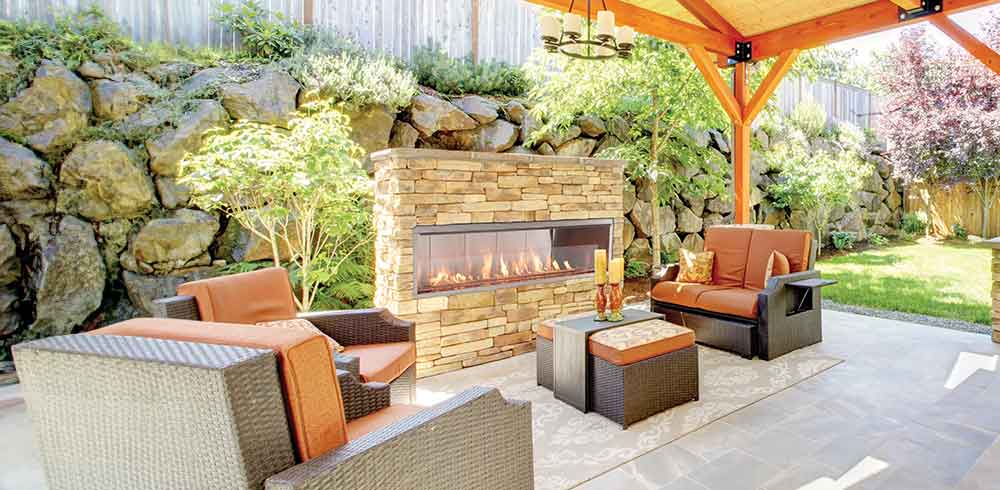
An outdoor fireplace can give your patio a focal point and a comfortable place to gather. Choosing the right one starts with more than its appearance: fuel type, installation requirements, weather exposure and how you plan to use the space all matter.
This outdoor fireplace guide compares gas, wood-burning and outdoor-rated electric options, then walks through location planning, construction considerations, budgeting and maintenance. For projects built around a manufactured appliance, finalize the fireplace selection before designing its enclosure or purchasing installation materials.
Choose Your Outdoor Fireplace Type
Start with the experience you want. Do you enjoy tending a wood fire, prefer the convenience of gas or want an electric flame display without combustion?
Outdoor Wood-Burning Fireplaces

An outdoor wood-burning fireplace offers real logs, crackling flames and the hands-on experience of building a fire. It is worth considering if those qualities are part of what you enjoy about spending time outdoors.
Plan for dry firewood storage, ash handling, smoke and ongoing fireplace and chimney maintenance. Check local wood-burning restrictions before purchasing, and confirm that the proposed chimney route and termination meet the selected appliance's instructions and applicable requirements.
Outdoor Gas Fireplaces

An outdoor gas fireplace provides a real flame without loading firewood or removing wood ash. Natural gas and propane options are available, depending on the model and configuration.
Before choosing a model, determine how fuel will reach the appliance. Some installations use a permanent gas supply; certain products permit an approved propane-cylinder arrangement. Electrical power may also be needed for ignition, lighting or controls. Confirm the exact requirements rather than assuming every gas fireplace works the same way.
Outdoor Electric Fireplaces
An outdoor-rated electric fireplace creates a flame effect without burning gas or wood. It can suit homeowners who prioritize convenient ambiance and want to avoid a gas supply or combustion chimney.
Select a model expressly approved for the intended outdoor installation. Outdoor approval does not automatically mean unrestricted exposure to rain, snow or irrigation. Follow the manufacturer's requirements for shelter, mounting, electrical connections and operating conditions.
Some electric models include supplemental heaters, while others are decorative. Confirm whether heat is included and whether the flame effect can operate separately. Also consider daylight and screen placement when evaluating how visible the display will be from your seating area.
Choose the Fireplace and Enclosure Style
A custom enclosure offers flexibility, but it also adds planning and construction work. Other formats may simplify parts of the project.
- Built-in fireplaces: Installed within an enclosure designed around the appliance's framing, clearance and finishing requirements.
- Ready-to-finish systems: May include a prepared enclosure that reduces framing work. Confirm what is supplied and which exterior finishes are permitted.
- Prefabricated fireplace structures: May include more of the finished structure, but still require suitable support, placement and any necessary utility connections.
- Outdoor-rated electric formats: May offer built-in or other mounting configurations. Use only the mounting method and location permitted for the selected model.
Package contents vary. Check whether the burner, decorative media, trim, controls, enclosure and required installation components are included before comparing prices.
Plan the Location Before You Build
Position the fireplace where people can enjoy it without blocking walking routes or creating conflicts with dining areas, doors and other outdoor equipment. Consider the view from your seating area as well as the fireplace's scale within the patio.
Your location assessment should include:
- Required clearances: Account for nearby walls, fences, vegetation, furnishings and overhead structures.
- Weather exposure: Evaluate wind-driven rain, snow, irrigation, drainage and any required shelter.
- Wind and smoke: Consider how prevailing winds may affect flames, smoke movement and nearby seating.
- Support: Have the foundation or supporting structure evaluated for the complete installation, including the enclosure and finishes.
- Utilities and access: Plan fuel or electrical routes, shutoff access, servicing and maintenance.
There is no single setback distance that applies to every outdoor fireplace. Confirm the selected appliance's requirements and applicable local rules before finalizing the location.
Covered Patios and Partially Enclosed Spaces
A roof, pergola, screen enclosure or surrounding walls can change which fireplaces are suitable. Do not assume a space qualifies as outdoors simply because one side is open.
For gas models, verify the manufacturer's definition of an acceptable outdoor installation, including required openness and overhead clearances. Wood fireplaces need appropriate chimney planning around nearby structures. Electric models must meet their specified shelter and exposure conditions.
Understand Venting and Utility Requirements
Combustion exhaust, ventilation around an appliance and ventilation within an enclosure are different requirements. Address each one that applies to your chosen fireplace.
Wood Fireplace Chimneys
Plan the chimney system specified for the wood fireplace, including its route, supports, clearances and termination. Factory-built construction does not eliminate chimney requirements or allow interchangeable pipe components.
Have the chimney design evaluated alongside nearby roofs and structures. Do not apply a general chimney-height rule without checking the complete appliance instructions and local requirements.
Gas Fireplace Venting and Fuel Supply
Some outdoor gas fireplaces do not use a separate combustion chimney, while other models require a specified venting system. A chimney-free design still has requirements for installation openness, clearances and potentially enclosure ventilation.
Have a qualified gas professional confirm fuel type, supply capacity, piping, regulation, shutoffs and any permitted cylinder arrangement. Natural gas and propane configurations are not interchangeable unless the manufacturer expressly permits conversion using the specified parts and procedure.
Electric Fireplace Power Supply
Check whether the electric fireplace plugs into a suitable receptacle or requires hardwiring. Have an electrician confirm the circuit, protective devices, wiring and outdoor connection requirements for the model and installation.
Do not assume every appliance requires the same circuit size, or that an existing outdoor outlet is suitable. Avoid extension cords unless expressly permitted by the manufacturer, and keep required air openings unobstructed.
Budget for the Complete Outdoor Fireplace Project

The appliance price is only part of the budget. Compare itemized project estimates that account for the work needed at your location.
- The fireplace and required accessories or installation components.
- Foundation work, structural support or patio alterations.
- Framing, enclosure construction and exterior finishes.
- Chimney or venting components where required.
- Gas supply, electrical work and any trenching or utility routing.
- Weather-management details, including flashing and drainage where specified.
- Labor, permits and inspections.
For ongoing expenses, consider fuel or electricity, cleaning and manufacturer-directed service. An outdoor fireplace may add enjoyment and visual appeal, but a specific resale-value increase or financial return should not be assumed.
How to Plan an Outdoor Fireplace Build
The construction details depend on the selected appliance and site. For a project using a manufactured fireplace, organize the work in this order:
- Define your goals: Choose the fuel type, appearance and intended use.
- Confirm site suitability: Check the location, support, exposure conditions and local requirements.
- Select the appliance: Review its installation manual before finalizing the enclosure design.
- Coordinate the installation: Plan framing, chimney or venting, utilities, drainage and service access together.
- Complete construction and connections: Have the appropriate professionals perform the work and complete required inspections.
- Finish and commission the fireplace: Apply permitted finishes without obstructing openings or access, then follow the manufacturer's checks and initial-operation instructions.
This sequence is a planning overview, not a substitute for model-specific installation instructions. A site-built masonry fireplace requires its own design and construction assessment.
Decide Which Work to Hire Out
Some homeowners may be able to complete portions of the project, but DIY experience alone does not establish that an installation is suitable or compliant. Gas work, electrical work, structural construction and chimney installation may require qualified or licensed professionals and permits.
Agree on responsibilities before work begins. Your contractor should understand the appliance's installation requirements, and everyone involved should use the same model-specific plans before framing or finishing starts.
Set Realistic Heating Expectations
An outdoor fireplace can make nearby seating more comfortable, but it should not be treated as a promise of whole-patio heating. Wind, outdoor temperature, appliance design and seating distance affect the warmth you feel.
A gas appliance's BTU input rating describes fuel energy supplied to the burner, not guaranteed heat delivered to guests. Electric heating capabilities vary by model, and a wide flame display does not necessarily mean more heat. For wood, the appliance design and how the fire is operated also matter.
Plan for Maintenance and Weather Protection
Follow the maintenance schedule and weather-protection instructions for the exact fireplace. An outdoor rating does not make an appliance maintenance-free.
- Wood: Handle cooled ash as directed, maintain the firebox and arrange appropriate chimney inspection and cleaning.
- Gas: Keep approved openings clear of debris and arrange manufacturer-directed inspection and service of the burner, controls and fuel system.
- Electric: Disconnect power as instructed before cleaning, keep air openings clear and follow the specified exposure and temperature limits.
Use covers only as directed and after the appliance has cooled. Do not add drainage holes, sealants, wind guards or other modifications unless permitted by the manufacturer. Seasonal shutdown and storage requirements vary by model.
Outdoor Fireplace FAQs
Can You Use an Indoor Fireplace Outdoors?
Only if the manufacturer expressly approves that model for the intended outdoor installation. A covered location does not automatically make an indoor appliance suitable. Check permitted exposure, installation conditions and utility requirements before purchasing.
Is an Outdoor Fireplace Warmer Than a Fire Pit?
Neither is universally warmer. The appliance design, fuel, wind and seating arrangement affect comfort. A fireplace generally creates a focal point facing one seating area, while a fire pit can allow people to gather around multiple sides.
Can You Burn Wood in an Outdoor Gas Fireplace?
No. Do not burn wood in an appliance designed for gas. A gas log lighter used to start wood in a compatible wood-burning fireplace is a different product and must be expressly permitted for that application.
How Do You Light an Outdoor Gas Fireplace?
Follow the lighting instructions for the exact model and ignition system. Do not apply a generic sequence to every fireplace. If you smell gas or the appliance does not light normally, stop and follow the manufacturer's safety instructions.
Do Outdoor Electric Fireplaces Produce Heat?
Some outdoor-rated electric fireplaces include a heater, while others are decorative. Check the selected model's heating capability and whether its flame effect can operate without heat. Outdoor conditions will affect the warmth you feel.
Final Thoughts
The best outdoor fireplace for your project fits the way you want to use the patio and the conditions where it will be installed. Compare gas, wood and outdoor-rated electric options, then confirm location, utilities and installation requirements before construction begins.
Explore our outdoor gas fireplaces, outdoor wood fireplaces and outdoor electric fireplaces. For help comparing products and locating installation documentation, contact our product specialists with your project photos, dimensions and preferred fuel type.