
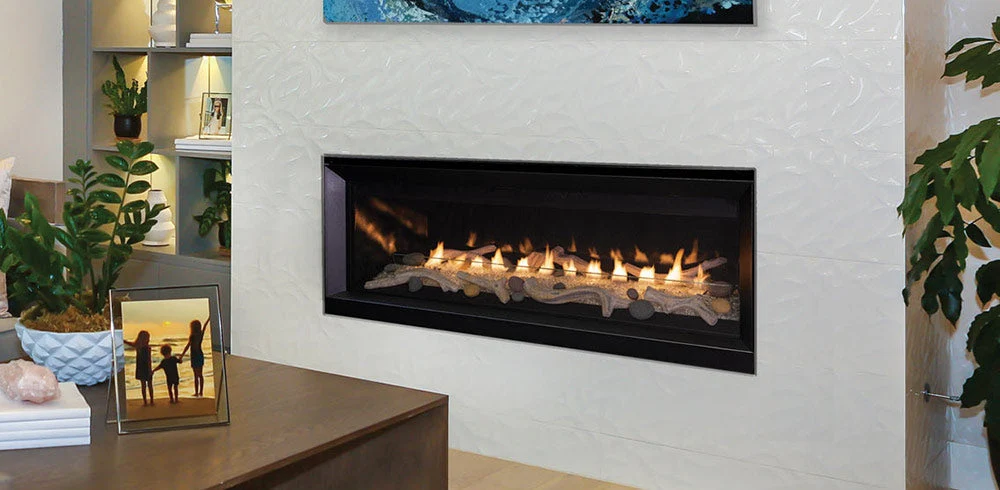
A linear fireplace is a wide, horizontal fireplace designed to create an expansive view of the flames. Available in gas and electric configurations, linear fireplaces are popular in contemporary living rooms, media walls, bedrooms, and outdoor entertaining spaces. The right model depends on your preferred flame appearance, heating needs, installation location, and available utilities.
Unlike traditional fireplaces with taller, more square-shaped openings, linear fireplaces emphasize width and a streamlined appearance. Many models also offer decorative fire glass, contemporary logs, adjustable flame effects, and different installation configurations. This guide explains the types of linear fireplaces, their benefits, installation considerations, and answers to common questions homeowners ask before buying.
What Is a Linear Fireplace?

A linear fireplace is a fireplace with an elongated, horizontal viewing area that creates a wide display of flames. Its low-profile design makes it a popular choice for modern interiors, especially accent walls and entertainment spaces.
Linear fireplaces are available in several configurations, including built-in, recessed, wall-mounted, and see-through designs. Depending on the model, they may operate using natural gas, propane, or electricity. Some models are also specifically designed for outdoor installation.
While their appearance is often the main attraction, many linear fireplaces also provide supplemental heat. Heating capabilities vary by fuel type and model, so it is important to consider both appearance and performance when choosing a fireplace.

Types of Linear Fireplaces
The three main categories to consider are electric linear fireplaces, direct-vent gas fireplaces, and vent-free gas fireplaces. Outdoor linear fireplaces are also available in configurations specifically designed for exterior environments.
| Fireplace Type | Venting | Key Considerations |
|---|---|---|
| Electric | No combustion venting required | Simulated flames, optional supplemental heating on many models, and electrical installation requirements |
| Direct-Vent Gas | Dedicated venting to the outdoors | Real gas flames, sealed combustion systems, gas supply, and approved vent routing |
| Vent-Free Gas | No exterior exhaust vent | Real flames, room air and ventilation requirements, and local installation restrictions |
| Outdoor Linear | Depends on the approved model and installation | Outdoor-rated construction, exposure limitations, fuel or electrical connections, and manufacturer installation requirements |
Electric Linear Fireplaces
Electric fireplaces create the appearance of flames using lighting and visual effects rather than combustion. Many models include adjustable flame colors, ember bed lighting, remote controls, and electric heaters that can operate independently of the flame display.
Electric linear fireplaces are especially popular for media walls, bedrooms, and remodeling projects where adding gas piping or combustion venting is impractical. However, installation requirements vary. Some models plug into an appropriate electrical outlet, while others require hardwiring or dedicated electrical circuits.

Popular electric linear fireplace options include:
- Amantii Symmetry Bespoke Built-In Electric Fireplace: A contemporary built-in electric option for homeowners planning a streamlined fireplace wall.
- Dimplex IgniteXL Bold Linear Electric Fireplace: A wide-format built-in fireplace designed for a modern focal point.
- Superior MPE-D Linear Electric Fireplace: An electric model featuring a contemporary ember bed and driftwood-style decorative media.
Explore our electric fireplace collection to compare additional designs and configurations.
Direct-Vent Linear Gas Fireplaces
Direct-vent linear gas fireplaces use natural gas or propane to produce real flames. Their sealed combustion systems draw combustion air from outside and discharge combustion exhaust outdoors through an approved venting system.
These fireplaces are a popular choice for homeowners who want the appearance of a real fire with a modern, horizontal design. Many models offer decorative media, electronic ignition, flame controls, and optional accessories, depending on the configuration.

For example, the Superior DRL3555 Direct-Vent Gas Fireplace features a wide linear design with contemporary crushed glass media.
Homeowners considering this style can explore our direct-vent gas fireplaces and compatible gas fireplace venting options. Always follow the fireplace manufacturer's approved venting specifications.
Vent-Free Linear Gas Fireplaces
Vent-free linear gas fireplaces provide real gas flames without requiring a traditional chimney or exterior exhaust vent. Because combustion products remain within the installation space, these fireplaces have specific requirements related to room size, ventilation, air quality, and permitted installation locations.
Vent-free appliances are not permitted in every jurisdiction, and some rooms or building types may have additional restrictions. Confirm local requirements and the manufacturer's installation instructions before selecting a model.
The Monessen Artisan Vent-Free Gas Fireplace is one example of a contemporary linear design. Another option is the White Mountain Hearth Boulevard Ventless Linear Fireplace.
Browse our ventless gas fireplace collection for additional options.
Outdoor Linear Fireplaces
Linear fireplaces are not limited to indoor living spaces. Outdoor-rated models can create a striking focal point on patios, covered outdoor living areas, and other approved exterior installations.
Outdoor linear fireplaces are available in gas configurations, including single-sided and see-through designs. Certain electric fireplaces are also designed for specified outdoor environments. However, an indoor fireplace should never be installed outdoors unless its manufacturer explicitly approves that application.
Outdoor models worth exploring include:
- Outdoor Lifestyles Lanai See-Through Linear Gas Fireplace: A wide-format, see-through gas fireplace designed for outdoor living applications.
- Firegear Kalea Bay Linear Outdoor Fireplace: An outdoor gas fireplace with a contemporary horizontal flame presentation.
- Carol Rose by Empire Outdoor See-Through Gas Fireplace: A double-sided outdoor gas fireplace with a linear design.
- Amantii Tru-View Bespoke Indoor/Outdoor Electric Fireplace: A three-sided electric fireplace designed for approved indoor and outdoor installations.
When choosing an outdoor fireplace, consider exposure to moisture, wind, required clearances, electrical or gas connections, and any restrictions involving covered patios or enclosed outdoor spaces. The manufacturer's installation manual determines which environments are approved.
Benefits of Linear Fireplaces
Linear fireplaces combine contemporary styling with several practical advantages. The exact benefits depend on the fireplace type and model.
Modern, Space-Conscious Design
The elongated shape creates a distinctive architectural feature without the tall proportions of a traditional fireplace. This makes linear models especially appealing for contemporary living rooms, accent walls, and entertainment areas.
Wide Flame Viewing Area
Many linear fireplaces emphasize an uninterrupted horizontal flame display. Some models offer clean-face designs with minimal visible trim, while others feature decorative surrounds or multiple viewing sides.
Customizable Appearance
Depending on the model, homeowners may be able to select decorative fire glass, stones, driftwood-style logs, accent lighting, or different flame effects.
Only use decorative media specifically approved for the fireplace. Adding incompatible materials can interfere with operation or create safety concerns.
Supplemental Heating Options
Both gas and electric linear fireplaces can provide heat, although output and heating capabilities vary significantly. Some electric models also allow the visual flame effects to operate without the heater, making them useful for ambiance during warmer months.
Linear Fireplace Installation and Design Options
One of the advantages of linear fireplaces is the variety of available installation styles. Choosing the right configuration depends on your wall construction, available utilities, room layout, and the fireplace manufacturer's installation requirements.
Wall-Mounted Linear Fireplaces

Wall-mounted linear fireplaces attach to an approved wall surface rather than being fully recessed into a framed opening. This installation style is commonly associated with electric fireplaces and can provide a floating appearance.
Always confirm wall support, mounting requirements, electrical connections, and clearances before installation.
Built-In and Recessed Linear Fireplaces

Built-in linear fireplaces are designed to integrate into a wall or specially constructed enclosure. Some models allow a nearly flush appearance, creating a streamlined look that complements stone, tile, or other approved finishing materials.
Framing dimensions, ventilation openings, finishing material restrictions, and service access requirements vary by fireplace. Review the installation manual before beginning construction.
See-Through and Multi-Sided Linear Fireplaces
See-through linear fireplaces provide views of the flames from two sides, making them useful for approved divider walls and open-concept layouts. Three-sided models offer additional viewing angles and can create a dramatic architectural feature.
The Sierra Flame Palisade See-Through Gas Fireplace and Amantii Tru-View Bespoke Electric Fireplace illustrate two different approaches to multi-sided fireplace design.
How to Choose the Right Linear Fireplace

Choosing a linear fireplace involves more than finding a design you like. Consider how the fireplace will be used, where it will be installed, and what your space can accommodate.
1. Decide Between Gas and Electric
If you prefer real flames and have the appropriate gas supply and installation conditions, a gas fireplace may be a good fit. If you prioritize simulated flame effects, flexible heat settings, and avoiding combustion venting, consider an electric fireplace.
2. Measure Your Available Wall Space
Consider the width of the wall, surrounding furniture, and any television or decorative elements. A wider fireplace may complement a large accent wall, while a narrower model may be better suited to a smaller room.
Keep in mind that the advertised fireplace width may not equal its visible flame area or required framing dimensions. Always compare the manufacturer's specifications.
3. Consider Your Heating Needs
Some homeowners primarily want a decorative focal point, while others want supplemental warmth. Compare the heating capabilities of individual models and consider room conditions, insulation, and the intended use of the space.
4. Plan the Installation Before Purchasing
Confirm gas or electrical requirements, approved venting routes, framing dimensions, clearances, and finishing material restrictions. For gas installations and electrical work, use qualified professionals as required by local regulations.
5. Compare Controls and Decorative Features
Depending on the model, available features may include remote operation, adjustable flame height or effects, decorative lighting, thermostatic controls, and optional accessories.
Explore our fireplace remotes for compatible control options, and verify compatibility before purchasing accessories.
Linear Fireplace FAQs
Are Linear Fireplaces Worth It?

Linear fireplaces can be worth it for homeowners who want a modern focal point, a wide flame display, and optional supplemental heating. Their value depends on the model's features, installation costs, and how well the design fits your space.
Do Linear Fireplaces Need to Be Vented?

Not all linear fireplaces require venting. Direct-vent gas fireplaces require an approved system to exhaust combustion gases outdoors. Vent-free gas models do not use an exterior exhaust vent but have specific installation and ventilation requirements. Electric linear fireplaces do not produce combustion exhaust and therefore do not need combustion venting.
How Far Off the Floor Should a Linear Gas Fireplace Be?

There is no single installation height that applies to every linear gas fireplace. The permitted height depends on the specific model, its installation requirements, and applicable local codes. Consider viewing comfort and surrounding furniture only after confirming the manufacturer's minimum clearances and approved mounting or framing instructions.
Can You Mount a TV Above a Linear Fireplace?
Yes, some linear fireplaces can be installed beneath televisions, but the arrangement must meet the fireplace manufacturer's requirements and the television manufacturer's temperature and clearance limits. Heat can damage electronics, and some gas fireplaces require specific mantel configurations, heat-management accessories, or minimum separation distances.
Never assume that a linear fireplace is automatically safe beneath a television simply because it has a low-profile design.
How Do Electric Linear Fireplaces Work?
Electric linear fireplaces use lighting and visual effects to simulate flames. Many include an electric heating element and fan to provide supplemental warmth. Depending on the model, homeowners may be able to adjust flame brightness, colors, heating settings, and decorative lighting independently.
Electrical requirements vary. Some fireplaces plug into approved outlets, while others require hardwired connections.
Do Linear Electric Fireplaces Produce Real Heat?
Many linear electric fireplaces include built-in heaters that provide supplemental warmth. However, heating output varies by model, and some units are primarily decorative. Check the manufacturer's heating specifications to determine whether a fireplace meets your needs.
What Does Clean-Face Mean on a Linear Fireplace?
A clean-face fireplace is designed to minimize visible louvers, grilles, or bulky trim around the viewing area. This creates a streamlined appearance that works well with contemporary wall finishes. Approved finishing materials and required clearances depend on the specific fireplace.
What Decorative Media Can Be Used in a Linear Fireplace?
Depending on the model, linear fireplaces may feature reflective fire glass, decorative stones, ceramic media, or contemporary log sets. Electric models may also include illuminated ember beds. Only use media and accessories specifically approved by the fireplace manufacturer.
Can Linear Fireplaces Be Installed Outdoors?
Yes. Certain linear gas and electric fireplaces are specifically designed for outdoor installation. Outdoor models have manufacturer-defined installation requirements related to exposure, moisture, clearances, and utility connections. An indoor-only fireplace should never be installed outside.
Are Linear Fireplaces Difficult to Maintain?
Maintenance depends on the fuel type. Electric fireplaces generally require periodic cleaning and inspection according to the manufacturer's instructions. Gas fireplaces require additional attention to burners, ignition components, venting where applicable, and other operating parts. Follow the manufacturer's service schedule and arrange professional maintenance when required.
Final Thoughts
Linear fireplaces offer a contemporary alternative to traditional fireplace designs, with options ranging from electric accent-wall installations to direct-vent gas fireplaces and outdoor see-through models. The best choice depends on your desired appearance, heating needs, installation location, and available utilities.
Explore our selection of gas fireplaces and electric fireplaces to compare designs and find a model that fits your project.
Need help choosing a linear fireplace or understanding installation requirements? Contact our fireplace product specialists for assistance with product selection, features, and compatibility.