

Upgrading your home with modern fireplace logs is an excellent way to capture the cozy ambiance of a real wood fire without the hassle of smoke, ash, or hauling logs. When choosing a setup, your main decision will be between choosing realistic vented log configurations that require an open chimney, or high-efficiency ventless systems designed for maximum zone heating. Check out our comprehensive selection of premium Gas Log Sets to find the perfect match for your home layout.
Gas Fireplace Logs Sizing & Buying Guide: Vented vs. Ventless Sets
Choose the Perfect Fuel Configuration, Ignition System, and Media Layout for Your Hearth
Upgrading your home with modern gas fireplace logs is an excellent way to capture the cozy ambiance of a real wood fire without the hassle of smoke, ash, or hauling logs. When choosing a setup, your main decision will be between choosing realistic vented log configurations that require an open chimney, or high-efficiency ventless systems designed for maximum zone heating.
Beyond selecting a venting category, completing a high-end hearth installation requires identifying the right ignition infrastructure for your lifestyle ranging from simple millivolt standing pilots to advanced electronic Intermittent Pilot Ignition ($IPI$) systems that spark up at the press of a button. You must also account for precise firebox clearance boundaries and localized building codes to ensure your new appliance runs cleanly and legally.
To explore your layout options or find the perfect styling kits for your space, look through our online inventory of premium Gas Log Sets, source foundational hardware from our Gas Log Burners line, or browse our certified Gas Log Components to build your ultimate custom hearth setup today.
Are You Considering a Gas Log Set?
Decorative gas appliances, also known as gas log sets, can enhance any living space. And with modern design, a gas log set can look just as natural as a real wood-burning fireplace, but without the smoke or ash. However, gas logs a0re not a one-size-fits-all solution, so we're here to help you find the best option for your fireplace installation.
Here are some of the most common questions we get regarding gas fireplaces and gas log sets.
Do Gas Fireplace Logs Need to Be Vented?
There are two distinct options when it comes to gas logs: vented and ventless (or vent-free). Vented gas log sets require venting through a fully functional chimney. Ventless gas log sets do not require venting, just an approved firebox. Choosing the best option for your home is a little less straightforward because there is no better option. The best option for your installation will depend on how you intend to use the fireplace.

Vented gas log sets
Vented gas logs must be vented through a functional chimney in order to move all burning by-products outside the home. Vented gas logs produce the most realistic flames but put off less heat than their vent-free counterparts due mostly to the fact the chimney flue must be open when the fireplace is in use. This is why vented gas logs are usually considered decorative appliances, so if aesthetics are your primary concern when renovating a fireplace, a vented unit is likely your best choice.
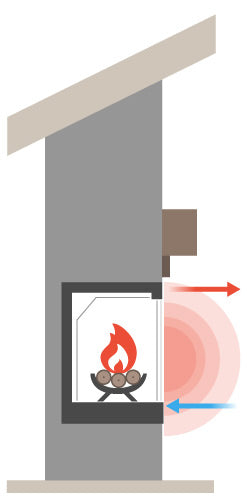
How Do Gas Fireplace Logs Work?
Burner System Components

Gas log sets feature several primary pieces no matter the installation. Nearly every unit includes the fireplace burner, burner pan, valve system and a decorative media material like fire glass, gas logs or shaped stones. Typically, these components are what make up a burner kit, though this may vary by brand.
There may also be additional accessories available for purchase, including ember bed enhancements or additional ceramic log pieces. However, not all accessories are compatible with all log sets. Be sure to read the ownerâs manual for your log set to determine if any of these additional components are available for your system.
Ignition Systems
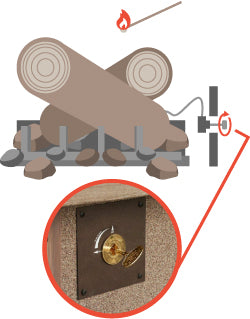
Non-Piloted Ignition Systems
Although not as common on modern gas log sets, non-piloted systems offer a very simple ignition option for a gas fireplace. These systems utilize a valve key to control gas flow, and all control is manual. When gas is released, a match or lighter is applied to ignite the fireplace. To extinguish the flames, the gas valve is returned to the off position.
Piloted Ignition Systems
Most gas log burners are piloted, similar to an appliance like a furnace. A pilot light system gives the burner the ability to shut off if no flame is present in order to prevent gas leaks. These systems can offer varied functionality depending on factors such as the construction budget and how the appliance will be used.
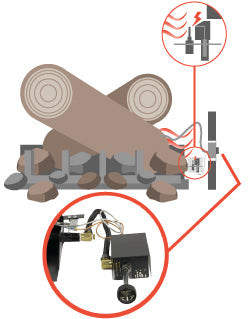
Manual Piloted Ignition Systems
These systems require the pilot light to be lit by hand. From there, the burner can be lit using a knob or valve to light the entire gas log set. These systems are easy to use and offer an added level of safety over a non-piloted manual ignition system.
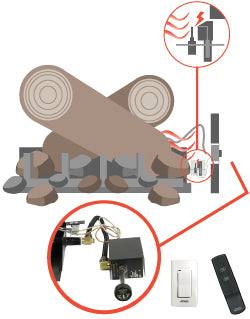
Manual Pilot with Remote or Switch
One slight upgrade over a simple manual piloted system is the addition of a remote or switch. These systems can involve a remote, a timer or a switch while maintaining the simplicity and safety of a manual piloted ignition system.
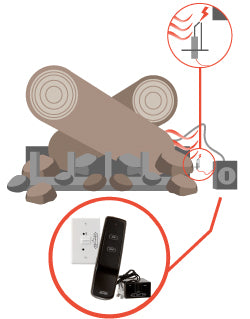
Electronic Ignition System
Electronic ignition systems offer the highest level of convenience for a gas fireplace or log set. This system uses batteries or hardwired electricity to first light the pilot light and in turn light the main burner with the simple push of a button. These systems are often referred to as IPI, or intermittent pilot ignition, because the pilot is no longer on at all times, but instead only when the entire burner is ignited.
Special Considerations for Ventless Gas Logs
What Makes Vent-Free Gas Logs Different?
Ventless gas logs are very similar to vented systems in their construction. In addition to the previously mentioned components, however, vent-free gas logs include an oxygen depletion sensor (ODS) to track the amount of oxygen in the air while the log set is in use. If oxygen drops below a certain level, this sensor shuts down the system to ensure safety.

Are Vent-Free Gas Logs Safe?
Ventless gas logs are a very safe option for your fireplace. These units go through rigorous testing and safety approval processes. In addition to these testing processes, the oxygen depletion sensor serves as a failsafe mechanism to ensure oxygen in the room always remains at safe levels. Always ensure your gas appliance is installed by a trained professional.
Why should you consider gas fireplace logs for your living space?
If you want to enjoy the relaxing visual appeal of a fire without the mess of chopping wood, modern fireplace logs offer the ultimate convenient alternative. These advanced ceramic log configurations are molded from real fallen wood specimens to mirror authentic oak, pine, or birch textures. They fit right inside your existing hearth cavity to deliver instant, on-demand fires without creating flying sparks, soot stains, or smoky indoor air. To explore your structural installation choices, browse our extensive archive of helpful articles in the Gas Fireplace Venting directory.
What are the main differences between vented and ventless fireplace logs?
Vented logs require an active, open chimney flue to safely exhaust combustion byproducts outside, resulting in a deeply realistic flame pattern but a lower heat retention inside the room. Conversely, ventless fireplace logs operate with the chimney damper completely closed, focusing 100% of the fire's heat back into your home. Review our high-efficiency Ventless Gas Log Sets to find a system built for maximum room warmth, or look over our ultra-realistic Vented Gas Log Sets if you prefer a traditional flame presentation.
How do you size new gas logs to fit your firebox opening safely?
To find the correct size for your fireplace logs, measure your firebox's front width, rear width, total depth, and height. Manufacturers require a minimum of 2 to 6 inches of clearance between the log burner kit and the inner masonry walls to ensure proper gas flow and valve safety. Reviewing our matching catalog of certified Gas Log Burners ensures your fuel lines line up perfectly with your chosen media size.
Can you convert a standard natural gas log set to run on liquid propane?
No, you should never attempt to convert gas fireplace logs from natural gas to liquid propane without swapping out the underlying orifice and burner components using a certified manufacturer conversion kit. Liquid propane requires a much higher air-to-fuel ratio than natural gas, and running propane over a standard natural gas burner will lead to dangerous levels of carbon monoxide and rapid soot accumulation. To find the correct parts for your setup, check out our verified line of Gas Log Components to source the correct factory parts.
Are there structural building codes that restrict vent-free fireplace logs?
Yes, while vent-free gas appliances are extensively tested and completely safe, they are restricted or completely banned in specific jurisdictions due to local air quality regulations. For example, California prohibits all indoor vent-free configurations, and states like New York restrict their use inside bedrooms or tightly sealed spaces. If you live in a restricted zone, exploring our legal, fully sealed Gas Fireplaces provides a perfect way to capture high heating efficiency safely.
Choose the Right Fireplace Logs for Your Hearth
Selecting the perfect set of fireplace logs comes down to balancing your personal visual preferences with your household heating requirements. Whether you select a vented system to capture the rolling visual beauty of a real wood fire or opt for an unvented burner to slash your home utility bills, upgrading to a gas appliance provides clean, hassle-free comfort at the press of a button. Take your time to measure your fireplace box carefully, select a safe ignition style, and check local guidelines to ensure your home stays cozy and compliant all winter long.
Shop Premium Fireplace Logs at Fireplaces Direct
Ready to trade your old wood-hauling chores for clean, instant warmth? Explore our online collection of top-tier Gas Log Sets today to find beautiful configurations from elite industry brands. From advanced Gas Log Burners to specialized replacement Gas Log Components, Fireplaces Direct has everything you need to complete a high-end fireplace upgrade. Contact our dedicated product experts today to build your dream configuration!
Frequently Asked Questions
1. How long do ceramic gas fireplace logs typically last?
With standard residential use and seasonal cleaning, high-quality ceramic gas logs can easily last between 10 and 15 years. Refractory ceramic sets retain their color and structural shape longer than lightweight fiber-ceramic variants, though both styles will eventually show minor wear from direct flame contact.
2. Why do my new ventless gas logs produce a strange smell when lit?
A minor odor is entirely normal during the first few hours of operating a brand-new gas log set. This is simply the factory manufacturing oils and hand-painted coatings curing under intense heat. Running the fireplace on high with a window cracked open for the first four hours will safely clear the smell away.
3. Can I arrange my gas logs in a different pattern than the manual shows?
No. You must always arrange your fireplace logs exactly as pictured in the factory installation manual. Moving logs directly into the path of a gas port causes flame impingement, which results in incomplete combustion, dangerous carbon monoxide production, and heavy black soot buildup.
4. Can I add loose fire glass or decorative rocks over my gas log burner?
You can only add loose media if your specific burner kit's owner manual explicitly approves it. Placing unapproved fire glass or stones over gas ports blocks the air mixers, leading to gas pooling, delayed ignitions, and potential component damage.
5. Do gas fireplace logs require electricity to provide heat?
Standard millivolt and manual pilot systems do not require any electricity to run, making them an excellent backup heat source during winter power outages. Only advanced electronic IPI ignition modules require backup battery packs or an active household electrical connection to spark up.
6. How do I clean soot off my vented gas logs?
Once the system has cooled down for several hours, you can gently remove the affected logs and clean away light carbon deposits using a soft-bristled brush or a dry cloth. Never apply water or chemical household cleaners to ceramic logs, as these fluids can soak into the porous material and create dangerous vapors when heated back up.
Key Takeaways
-
Vented for Realism: Vented logs offer highly realistic tall flames that wrap around the wood media, but they require a fully open chimney flue and act primarily as a decorative accent.
-
Ventless for High Heat: Vent-free options return 99% of the generated heat directly into your room, making them an ideal choice for supplemental zone heating.
-
Ignition Flexibility: Systems range from simple manual matches to modern Intermittent Pilot Ignition (IPI) electronics that spark up with a simple remote control button.
-
Safety First: All code-approved vent-free burners come equipped with a built-in Oxygen Depletion Sensor (ODS) that automatically shuts off the gas line if room oxygen drops below a safe threshold.


